
DEEP DIVE
“We must buy it to survive” … Restaurant industry wages ‘raw material procurement war’ amid U.S. short rib shortage
Imports of frozen U.S. short ribs plummet 24.4%... Major retailers secure supply, causing supply crisis for rib specialty restaurants
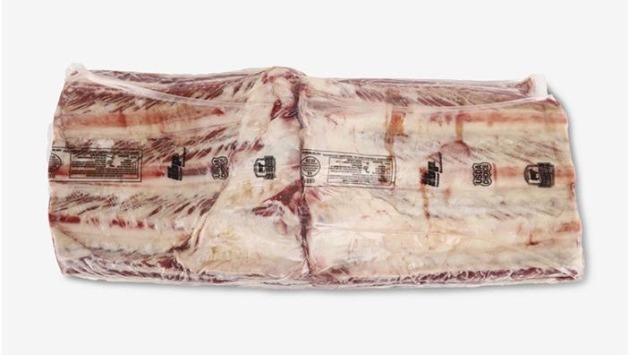
The atmosphere surrounding U.S. beef short ribs in the domestic meat market is becoming increasingly volatile. Companies that had been delaying purchases due to rising import prices are now scrambling to secure raw materials, even if it means accepting the high costs. For restaurant businesses that sell ribs as their main menu item, the ability to continuously secure the necessary supply has emerged as a greater concern than the cost itself.
Actual imports of frozen beef ribs from the U.S. have decreased by more than 24% compared to a year ago. In the U.S., the cattle farming base has shrunk, and recent crackdowns on immigrants have further disrupted operations at meat processing plants. Domestically, while large import and distribution companies have preemptively secured supplies, there are reports from the field indicating that some small and medium-sized importers and restaurants specializing in ribs are struggling to procure raw materials.

U.S. frozen ribs down 16,000 tons... chilled ribs actually increased slightly
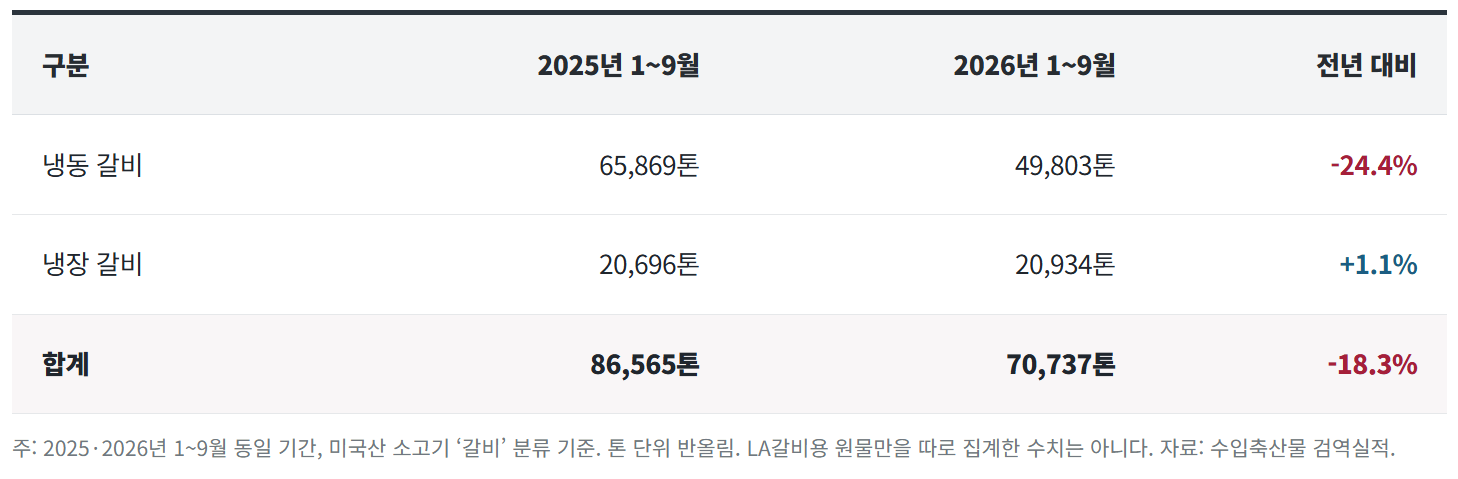
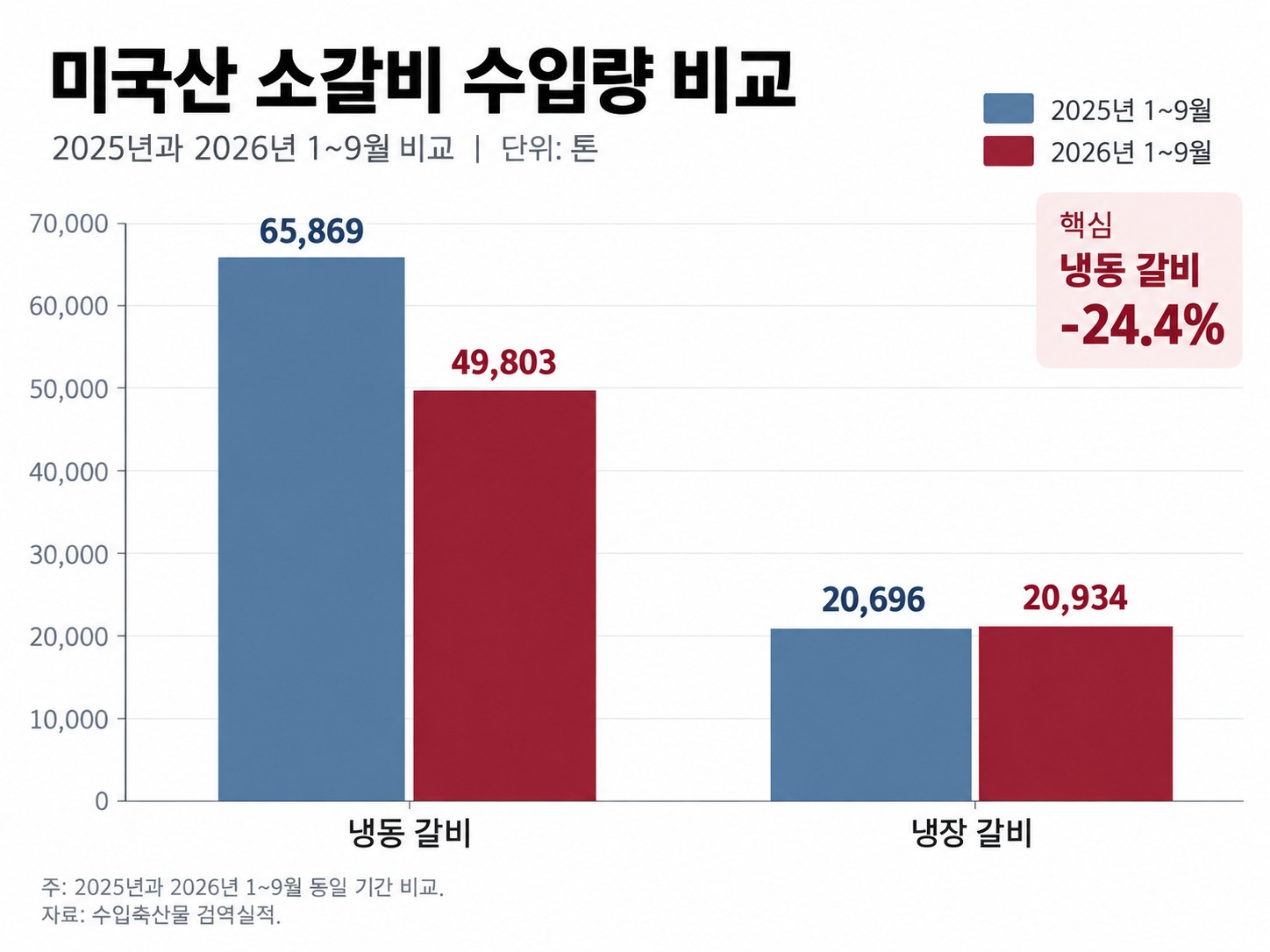
As a result of comparing the quarantine performance of imported livestock products in 2025 and 2026 over the same period, the import volume of frozen beef ribs from the United States from January to September this year was 49,803 tons, a decrease of 16,066 tons (24.4%) from 65,869 tons during the same period last year.
During the same period, chilled beef ribs increased by 1.1% from 20,696 tons to 20,934 tons. The total import volume of U.S. ribs, including both chilled and frozen, decreased by 18.3% from 86,565 tons to 70,737 tons.The key point of these statistics is that the decline in imports was concentrated on frozen ribs.am.
The United States remains the largest supplier in the domestic imported frozen rib market. From January to September 2026, U.S. products accounted for 53.1% of the total 93,811 tons of imported frozen ribs, while Australian products accounted for 34.3%. However, a shift in market composition is also being detected, given that the annual market share of U.S. products was 61.5% in 2025. This comparison of market shares covers different periods: the entirety of last year and the nine months of this year.
Large companies secured the galbi market early... Foodservice companies belatedly compete to secure it
In the domestic distribution sector, rather than a decrease in import volumeWhether I can continue to purchase ribs of the required specificationsIt places greater weight on it.
In a recent report, an official from the imported meat distribution industry explained that since the first half of this year, rising prices and limited supply offers for U.S. short ribs have made purchasing difficult for small and medium-sized importers. Conversely, large importers have actively bought up the available supply.
Even companies that had delayed purchases due to the burden of high prices, rather than waiting for prices to rise further, are now belatedly engaging in a competition to secure supplies as inventory in the distribution network dwindles. Some galbi specialty restaurant businesses are concerned about whether they will be able to continue receiving the necessary supplies from their existing suppliers.
Even if it's expensive, you have to buy it to survive.
This is an editorial expression that summarizes the on-site coverage indicating that the sustainability of raw material supply has become more important than the burden of price.
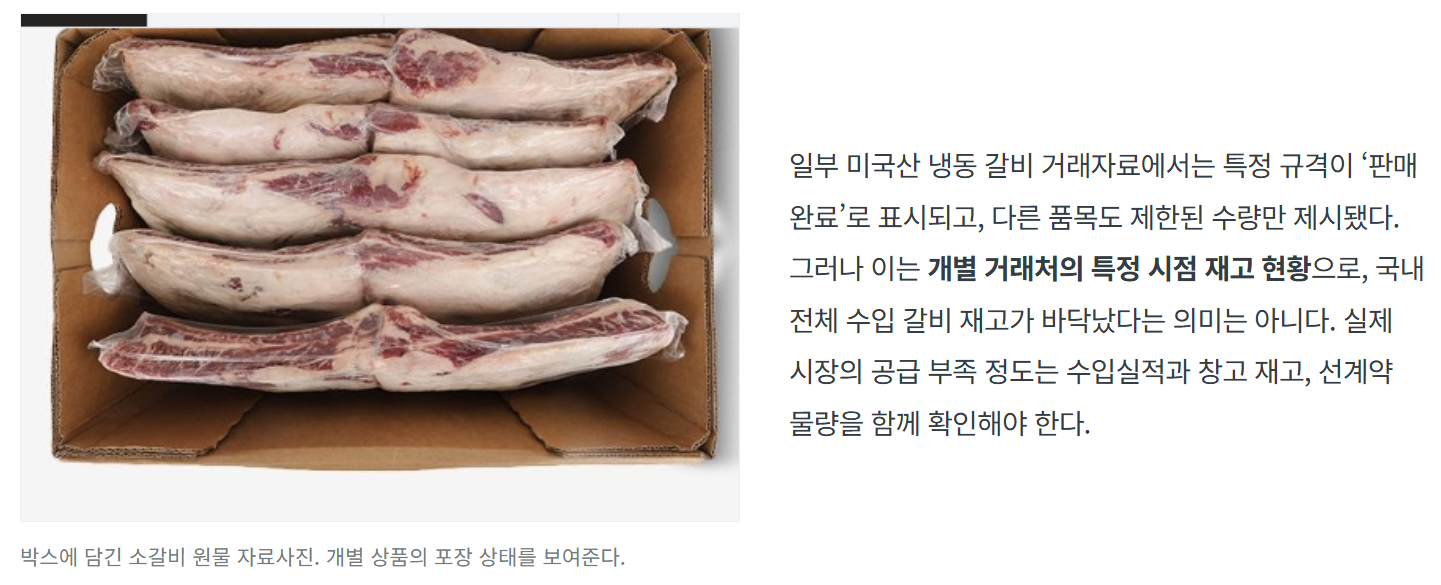
Restaurants specializing in galbi face limitations in reflecting rising costs in their selling prices. However, a more serious situation arises when the supply of raw materials is cut off, even if they are willing to pay the price. This is why restaurant companies view galbi procurement not merely as a matter of managing purchasing costs, but as a matter of business continuity.
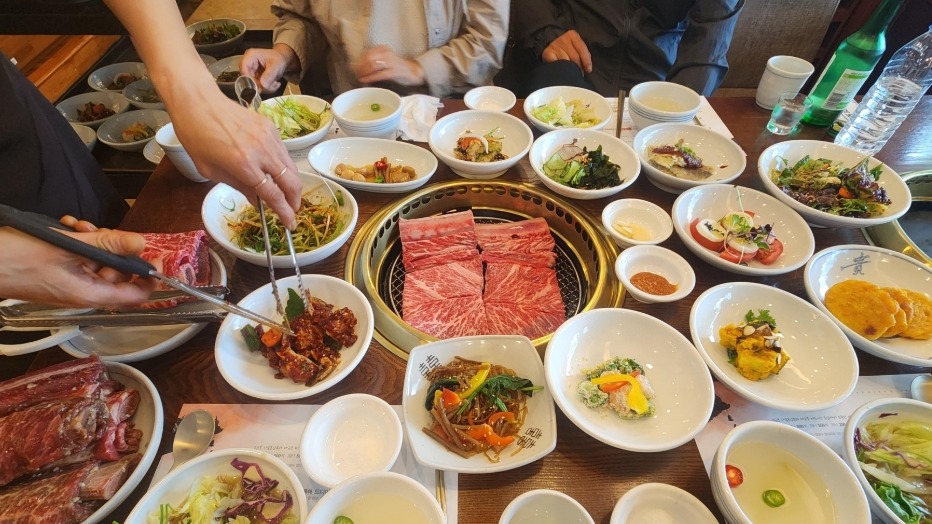
US cattle farming base shrinks… Production also projected to decline by 2026
The shrinking U.S. cattle farming base is cited as the fundamental reason for the contraction in the supply of U.S. beef ribs. According to the USDA, the total number of cattle in the U.S. is projected to reach approximately 86.2 million by early 2026, the lowest level since 1951. This is the result of years of accumulated factors, including a decline in breeding cows, a shortage of pasture due to drought, and the burden of high farming costs.
U.S. beef production has also declined since peaking at approximately 28.4 billion pounds in 2022. According to the USDA’s October 2026 forecast, U.S. beef production this year is expected to reach approximately 24.87 billion pounds, a 4.6% decrease from 2025.The 2026 figure is a forecast, not a confirmed result.all.
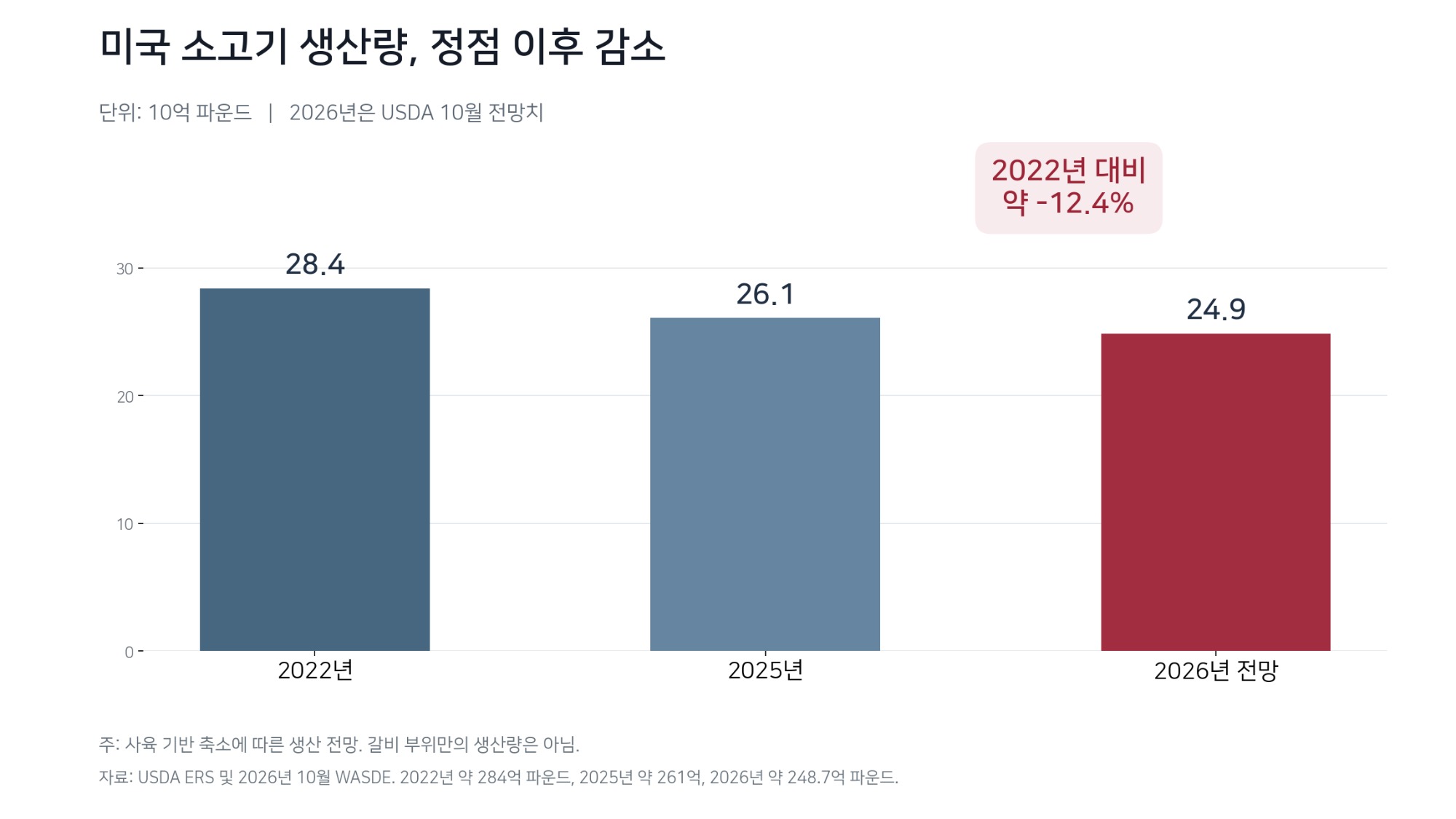
Increasing the number of cattle for slaughter requires a long time, from securing breeding cows to producing calves and fattening them. The structure makes it difficult to increase rib production in the short term simply because beef prices are rising. Recent restrictions on the import of live cattle from Mexico have also placed an additional burden on the supply of beef cattle in the United States.
Processing Plant Operations Disrupted by Immigration Crackdown… Additional Variable in Production Cuts
In addition to the decline in cattle populations, there have recently been cases where stricter U.S. enforcement against immigrants is shaking up meat processing plant operations. Reuters reported that in September, work was delayed at a major beef processing site in Kansas as some workers avoided reporting to work due to a raid by the Immigration and Customs Enforcement (ICE).
Large beef processing plants are concentrated in areas such as Dodge City and Liberal, Kansas. At the time, livestock organizations claimed that the shipment of thousands of fattening cattle was delayed, and the total number of slaughtered cattle in the U.S. also decreased significantly on a specific date compared to the same day of the previous week.

Spread of Korean food in the U.S.… Will increased galbi consumption affect export volumes?
The popularity of Korean food is also rising in the United States. According to the restaurant market research firm Circana, the number of Korean restaurants in the U.S. increased by 10% in 2024 compared to the previous year. Restaurants offering Korean-style barbecue and galbi menus are also on the rise.
The industry also raises the possibility that increased local consumption of galbi in the U.S. could compete with overseas export volumes. However, quantitative data has not yet been secured to confirm how much more short ribs for LA galbi are being consumed locally in the U.S., and how that increase has affected exports to Korea. Therefore, at present,Hypothesis to be distinguished from identified supply reduction factorsam.
We could switch to Australian beef, but... it's not an easy choice for galbi restaurants.
32,190 tons of frozen Australian beef ribs were imported from January to September this year, accounting for 34.3% of the total frozen imported rib market. However, the food service industry assesses that it is difficult to immediately replace U.S. ribs with Australian ones.
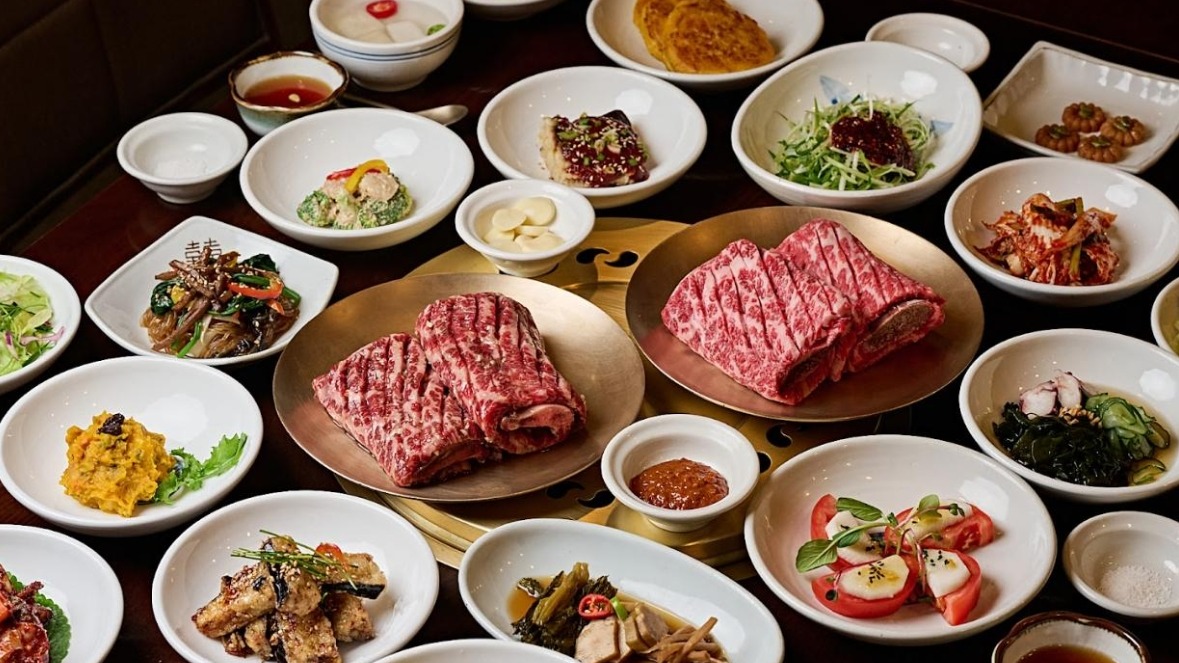
2027 Lunar New Year Supply Pre-contracted… Will Supply Instability Continue Until Chuseok?
Changes are expected in next year's holiday market as well. According to the industry, some major retailers have already placed orders and finalized contracts with vendors for LA galbi gift sets for the 2027 Lunar New Year. While this does not mean the entire volume has been imported into the country, it may become difficult for other buyers to secure the quantities tied up in these contracts.
It is assessed that sales of LA galbi gift sets were strong during Chuseok 2026, as some retailers maintained relatively low prices. However, if raw material prices continue to remain high, it may be difficult to maintain the same product composition and prices next year.
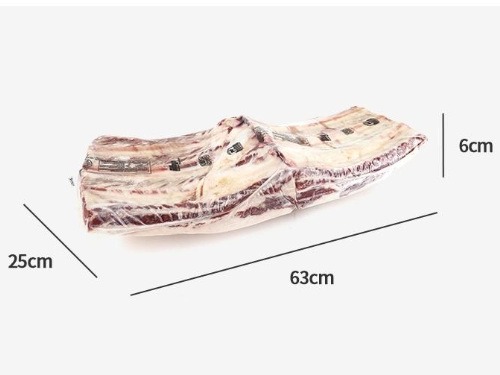

Some industry insiders believe that if U.S. supply conditions do not recover from current levels, supply and demand for Chuseok could become more difficult beyond the 2027 Lunar New Year. However, this is an industry forecast, and the actual situation may vary depending on U.S. production volume, exports to Korea, domestic inventory, and contract volumes.
Now, the sustainability of supply is a bigger issue than the price of ribs.
With imports of frozen ribs from the U.S. falling by more than 24% compared to a year ago, tension is mounting in the domestic rib market due to competition among companies to secure supplies. Raw material procurement conditions are also diverging between companies that signed contracts preemptively and those that began purchasing late.
In the U.S., supply constraints resulting from a shrinking cattle farming base have been prolonged, compounded by the variable of labor shortages at processing plants. Further verification is required to determine the immediate and direct impact this situation has had on specific galbi standards in Korea.
The more pressing issue for domestic galbi restaurant companies is not just ‘how much it will become.’Can you continuously secure the necessary ribs to maintain the menu and business operations?is emerging as a new challenge.
Data and verification scope
Quarantine results for imported livestock products in 2025 and 2026, classified as U.S. beef ‘ribs’, comparison of the same period from January to September. Figures from quarantine data by country and cut differ from the import volume dedicated to LA galbi.
U.S. Department of Agriculture (USDA) Beef Production Outlook;October 2026 Outlook Analysis.
Reuters, September 25, 2026, U.S. Kansas Immigration Enforcement and Beef Processing Disruptions.
Circana, Survey on the Growth of Korean Restaurants in the U.S. (2024).
Data provided by the domestic imported meat industry in October 2026 based on coverage and trading sites. Individual inventory and price examples do not represent the entire national market, and the 2027 holiday outlook is not a confirmed fact.
- #수입육
- #유통
Related Content
DEEP DIVE
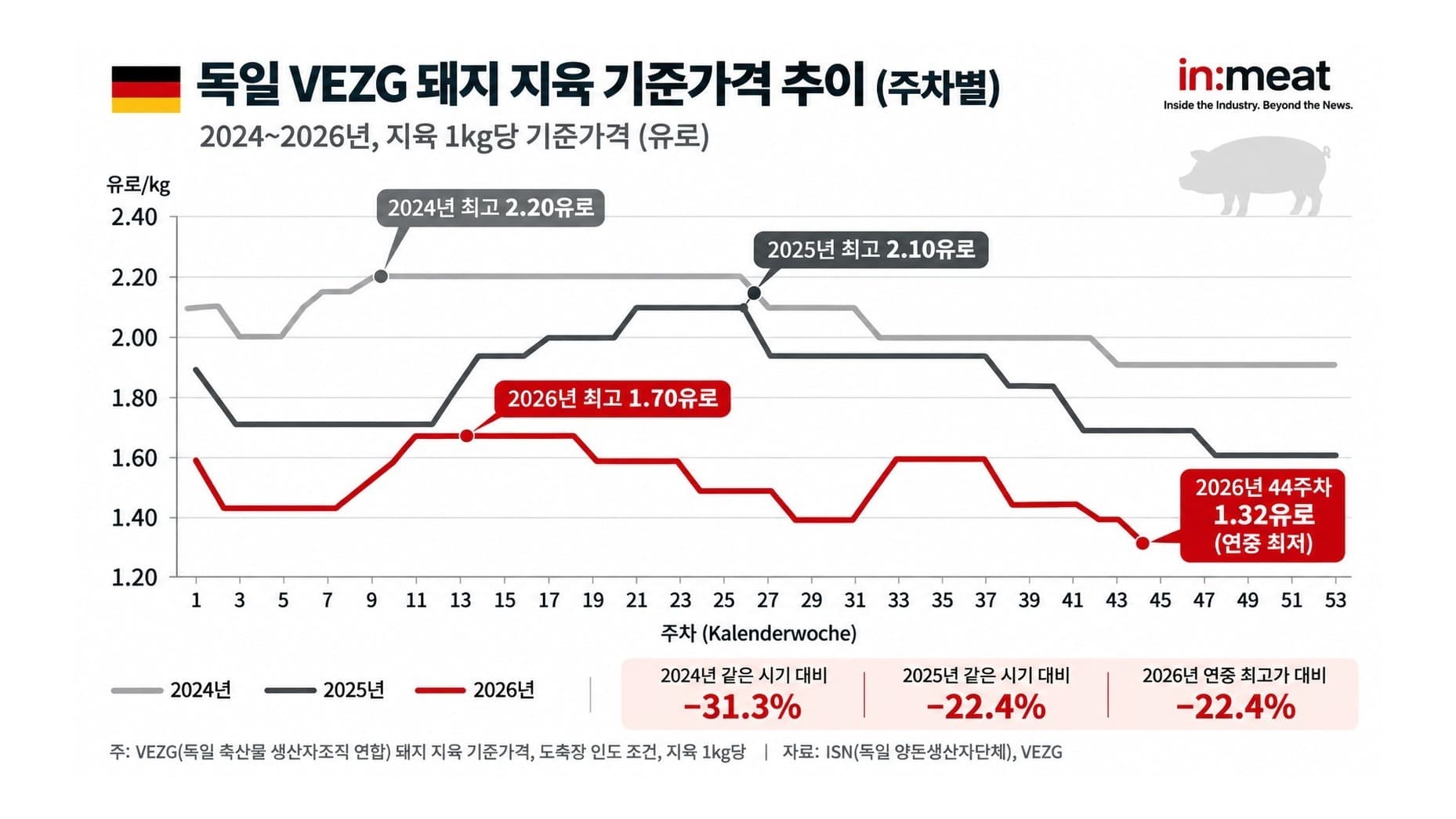
German Pig Prices 'Plunge'... 70 Euro Loss on Every Pig Sold
The management crisis for pig farms is deepening as the standard price of pork carcasses in Germany has fallen to 1.32 euros per kilogram. Producer organizations estimated that, taking into account total production costs, a loss of about 70 euros per pig is incurred.
2026.10.31
DEEP DIVE
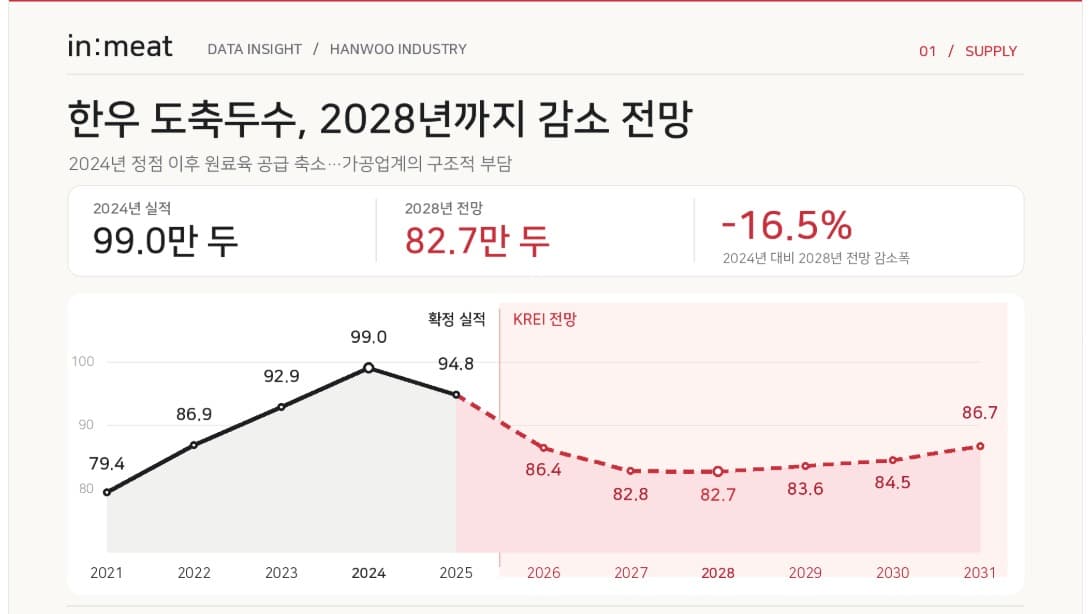
The Hanwoo meat processing business driven into a struggle for survival—is there no way out?
The Hanwoo beef processing industry stands at a crossroads of survival. The burden of maintaining existing production facilities and personnel is increasing as slaughter volumes have followed a decline in the number of cattle raised. On top of this, industry insiders explain that the business environment for processing companies is deteriorating due to a confluence of factors, including rising raw meat prices, intense competition in the market for specific cuts, and market expansion moves by major players.
2026.10.26
DEEP DIVE
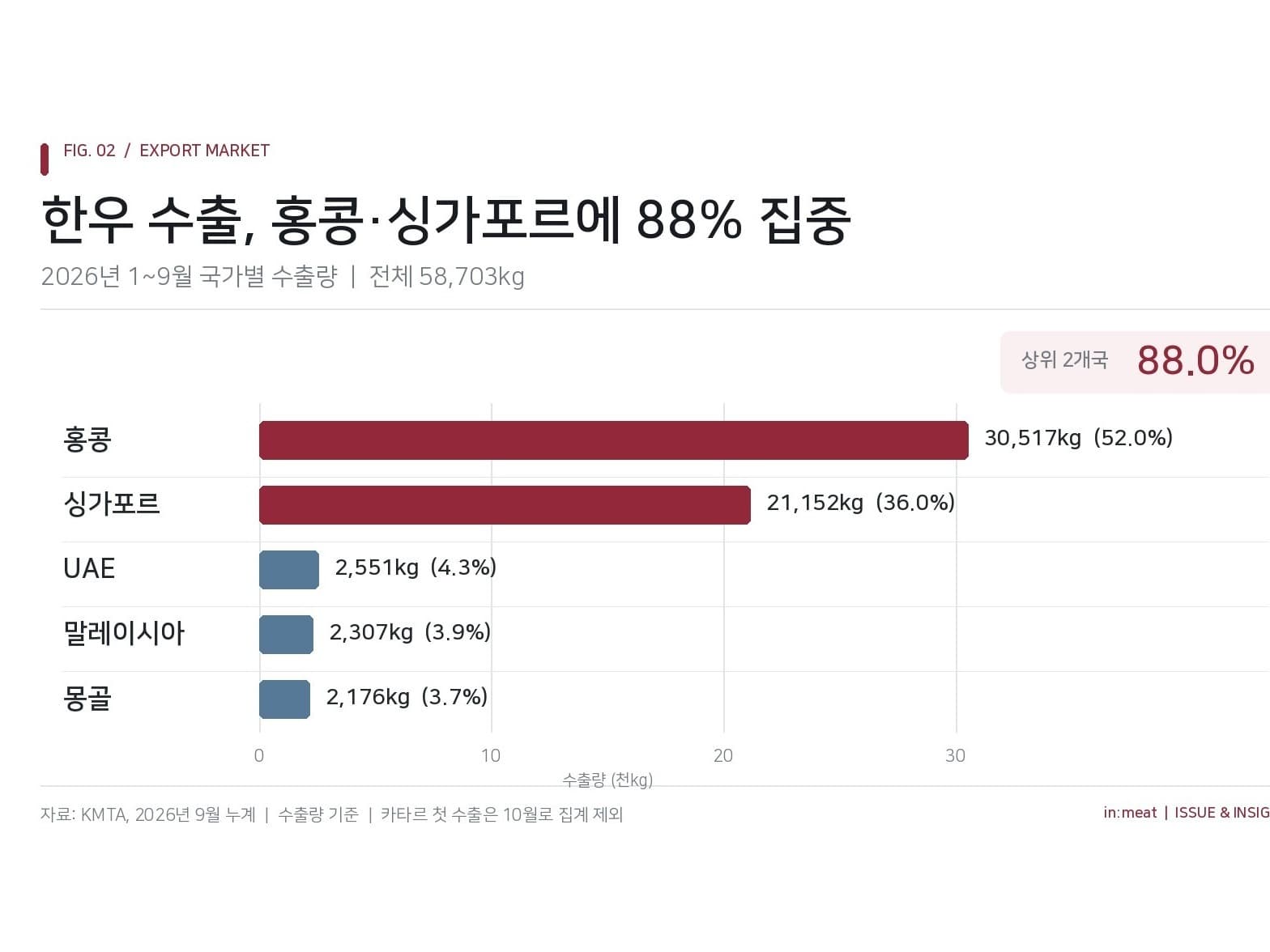
Hanwoo Exports Up 60%, But Market Concentration and Quarantine Barriers: One Hurdle After Another
Hanwoo exports are increasing rapidly. The government has also presented a plan to link Hanwoo with the global K-food export promotion system. However, 88% of export volume is concentrated in the two markets of Hong Kong and Singapore, and on-site issues such as slaughter and quarantine procedures for export and restrictions on market access due to livestock diseases remain unresolved.
2026.10.13