
PEOPLE
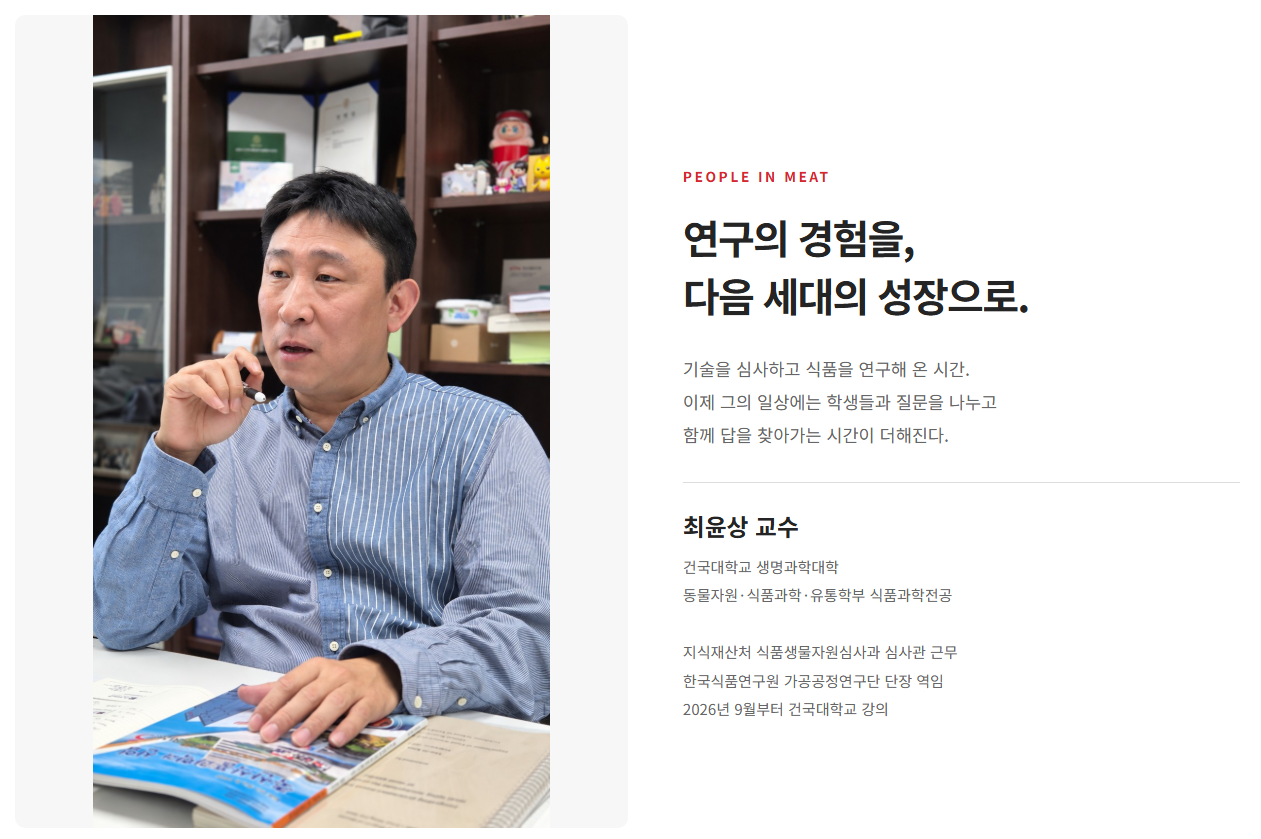
Time spent researching meat, now raising people… Professor Choi Yoon-sang of Konkuk University
Appointed to the position of full-time professor in the meat field, a position that has been vacant for approximately 10 years.
INTERVIEW BRIEF
A New Beginning After a Nearly 10-Year Vacancy in Full-Time Professorships in the Meat Field
Connecting patent examination and food research experience to university research and education
Equipped with research and practical training facilities, preparing for student guidance and the training of future personnel
Professor Choi Yoon-sang has been appointed to the position of full-time professor in the field of meat at Konkuk University, a role that had been vacant for about 10 years. Having served as an examiner at the Food and Biological Resources Examination Division of the Intellectual Property Office and as the head of the Processing Research Group at the Korea Food Research Institute, he began lecturing at Konkuk University last September and is extending his accumulated research experience to university research and education.
Professor Choi, whom I met at the Department of Food Science within the School of Animal Resources, Food Science, and Distribution at Konkuk University's College of Life Sciences, was in the process of establishing a foundation in his new environment. While preparing classes and meeting with students, he is also organizing his laboratory and getting ready to welcome personnel to work with him.
His appointment is drawing anticipation from researchers and industry insiders in the meat sector. This is because, while related classes have been conducted through lecturers, the position of full-time professor, which had been vacant for a long time, has now been filled. It signifies the establishment of a foundation to continuously continue activities related to researching and teaching meat.
Professor Choi, however, cautiously accepted the expectations placed upon him. His priority is to set up a research lab, recruit students, and establish the necessary environment for experiments and practical training. His new beginning is less a grandiose declaration and more a process of gradually building the conditions to continue his research and education.
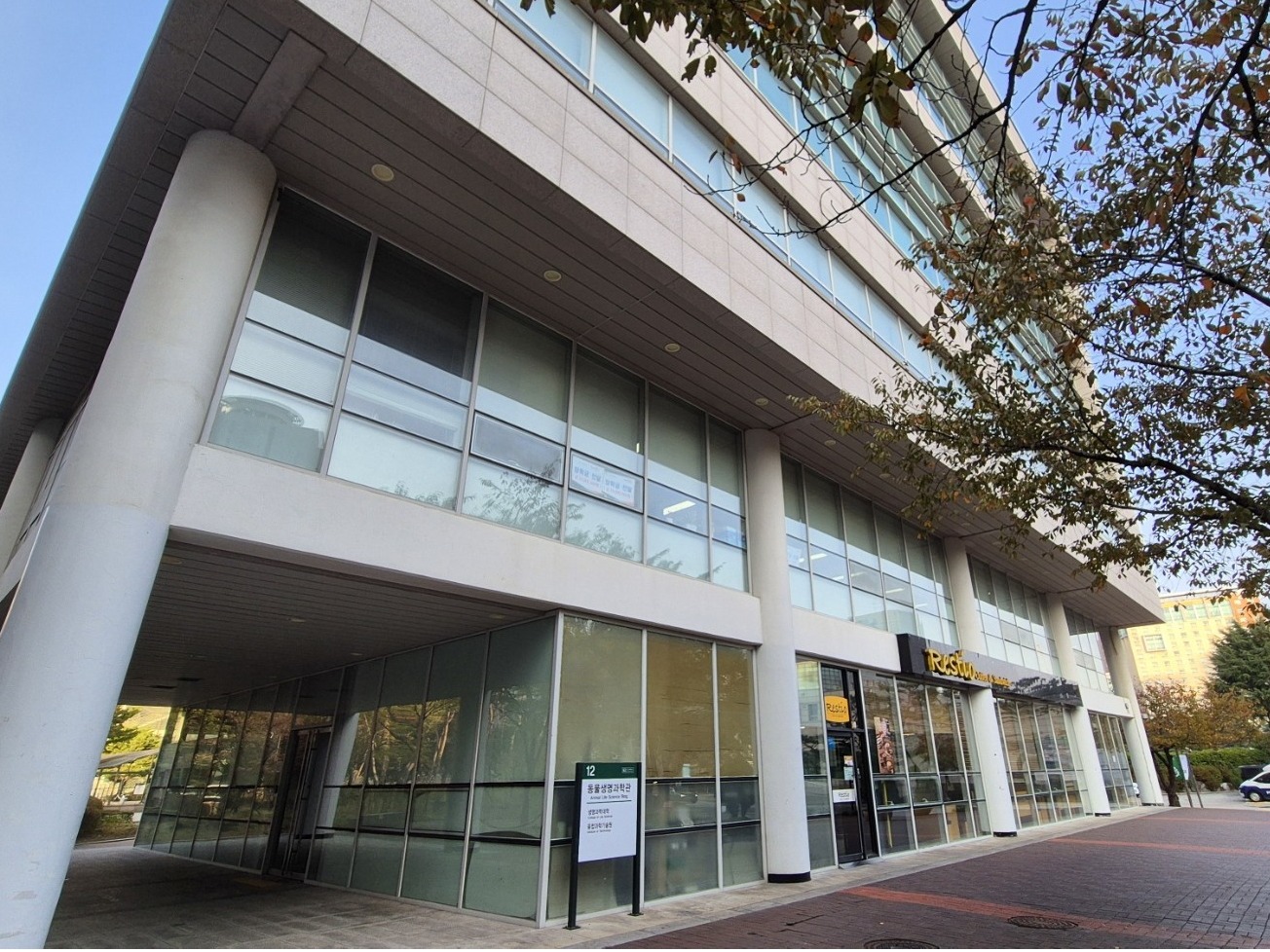
After patent examination and food research, I went to the university lecture hall.
Professor Choi’s background is rooted in experience gained outside of academia. He worked as an examiner at the Food and Biological Resources Review Division of the Intellectual Property Office and served as the Director of the Processing Research Group at the Korea Food Research Institute. It was through his experience in both technology review and hands-on research that he came to meet students at the university.
The field he described as his assigned area of expertise is ‘protein foods and meat processing.’ Currently, he teaches courses related to meat science and meat processing. This field covers the knowledge necessary to understand the characteristics of meat, examine the changes that occur during processing, and utilize it as a food product.
For him, having worked at a research institution, the university is a space where research and education are carried out together. In addition to producing research results, he was given the role of helping students participate in research and discover their own areas of expertise.
Student mentoring did not begin only after joining the university. I had been assisting students with their research through academic partnerships since my time at the research institute. The interview also covered stories about the students who sought me out to conduct research and their degree programs.
One of them is a thesis by a doctoral student on the topic of aged meat biomarkers. Professor Choi introduced an approach that analyzes protein changes during the aging process and identifies indicators to explain the state of aging, citing an example of a researcher he has assisted with the thesis.
He explained that just because meat is tender does not mean everyone likes it, and that people may have different preferences for texture. This highlights the significance of research that questions familiar phenomena and scientifically examines the differences.
From a place for conducting research to a place for nurturing research collaborators
In Professor Choi's explanation, research and talent development were inseparable. Students acquire expertise in the process of participating in research projects, learning experiments, interpreting results, and completing their theses. At the starting point of this lies the environment that enables the continuation of research.
We need research funding.
Choi Yoon-sang, Professor at Konkuk University
This statement was made while explaining the structure through which students gain research experience. Research funding is necessary to pay students' salaries and procure the materials and equipment required for experiments. The implication is that research involving students must continue so that subsequent personnel majoring in the field can also grow.
This also explains that laboratory management and student guidance are intertwined. Education is not complete merely by recruiting students. There must be research topics to explore together, an environment to conduct experiments, and the financial resources to support them.
For Professor Choi, securing research projects and establishing a laboratory is not only preparation for his own research but also laying the foundation for students to gain experience. His new role at the university demands both of these things.
Re-establishing the research lab after a hiatus of about 10 years
As he has taken office in a position that has been vacant for a long time, there is much to prepare. Professor Choi is establishing the research environment by organizing the laboratory and securing necessary equipment. Another task is to assemble the graduate students and research team who will join him in the future.
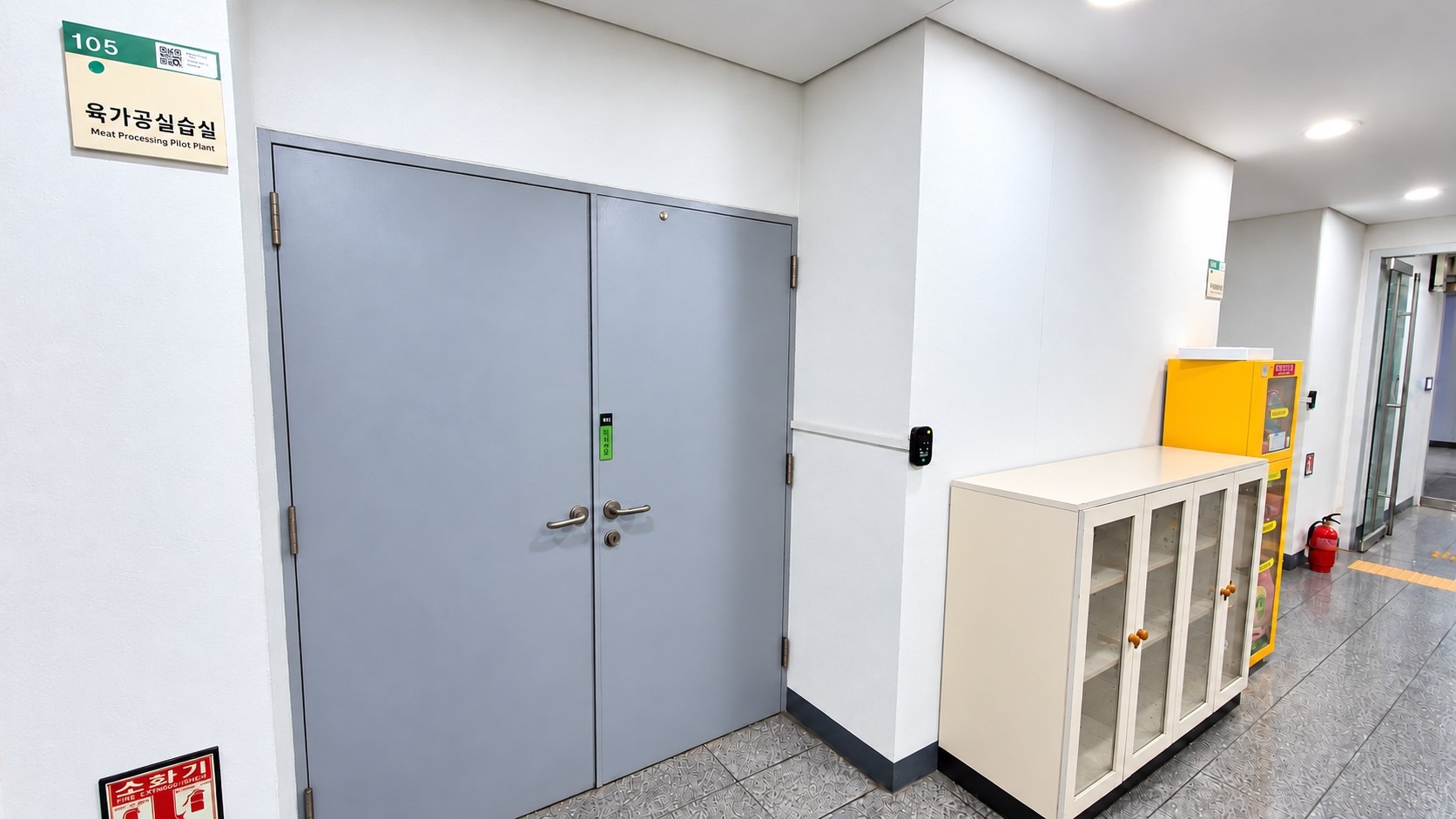
The existing meat processing training facilities also require inspection and maintenance. The mere fact that the facilities remain does not mean they can be immediately utilized for experiments and training. It is necessary to assess the condition of equipment that has not been sufficiently used for a long time and establish an environment where it can be actually operated.
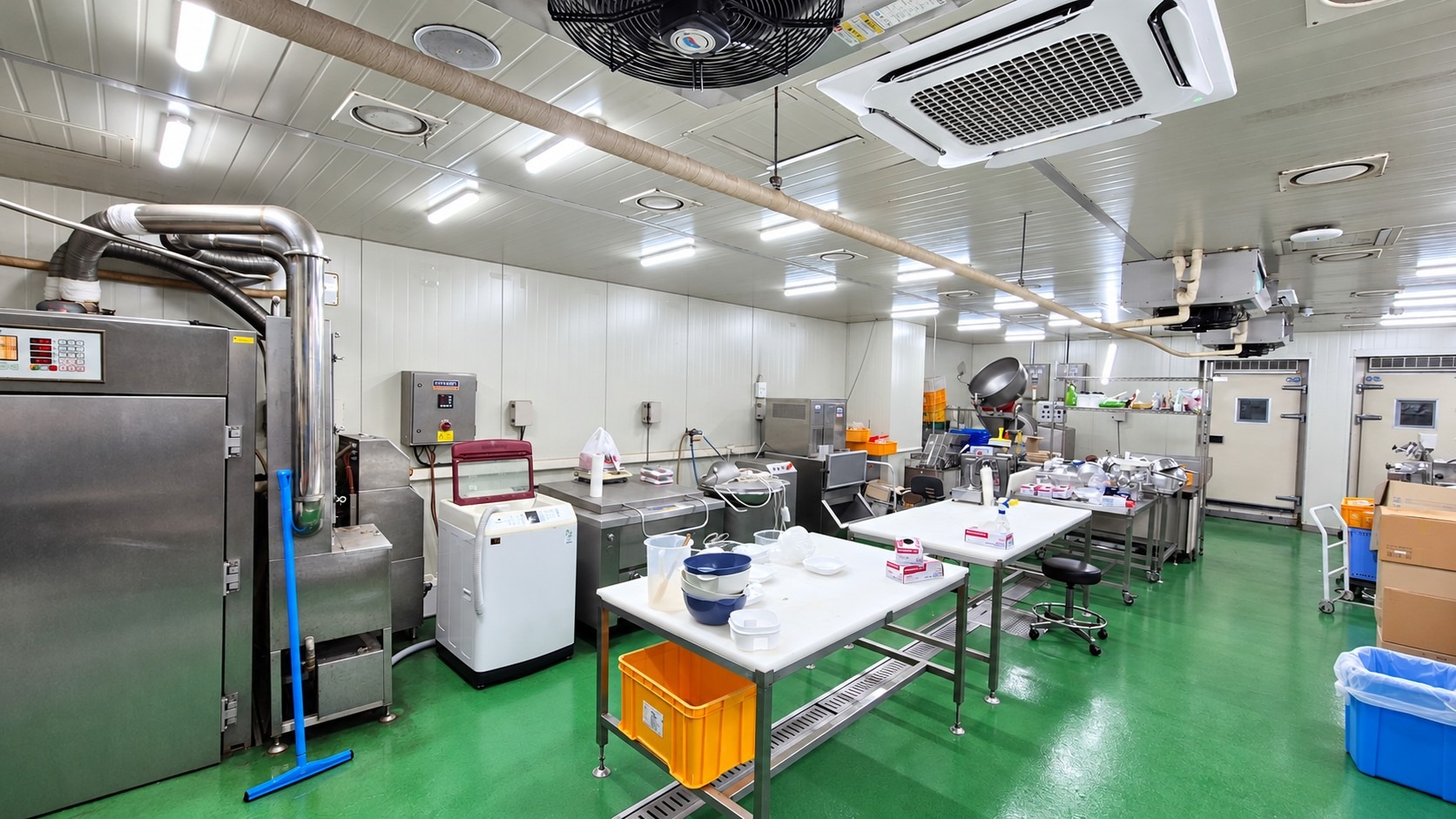
Professor Choi explained that the laboratory's infrastructure must be established first before the meat processing facility can be properly utilized for research. This means that research and education can only take place when space, equipment, the personnel to operate them, and research projects are all connected.
During the interview, the possibility of future practical training and education was also discussed. He replied that there were things that could be considered once graduate students and research labs were established. Rather than rushing to promise a new program, he appeared to be first assessing the current conditions and necessary preparations.
Expectations and concerns ahead of a new beginning
Professor Choi has many concerns. He must set up his office, welcome students, and continue both teaching and research simultaneously. Establishing a foundation for research and education after a long hiatus is not something that can be completed simply by taking office.
His concerns extend beyond his own laboratory. He is also examining the realities of university meat education, such as whether students have sufficient opportunities to handle actual meat and experience meat processing, and how to cultivate the next generation of personnel to carry on research in the meat sector.
The difficulty of lacking usable materials and having to rely on outdated resources while preparing for classes was also mentioned. Conveying accumulated knowledge in a way that today's students can understand, and connecting theory with experiments and practice, are also tasks faced as an educator.
Professor Choi explained that the flow of research funding influences students' research topics and fields of expertise. The rationale is that for the steady growth of skilled professionals in the meat and meat processing sectors, students must have continuous opportunities to conduct research in these fields.
While expectations are high, that weight cannot be placed on just one person. This is an area where universities and industry must work together to ensure research continues and students can gain experience.
On top of the time spent researching meat, time is now being added to ask questions and find answers together with students. Professor Choi Yoon-sang, who has made a fresh start at Konkuk University after a hiatus of about 10 years, faces the tasks of continuing his research and nurturing the people who will collaborate with him.
- #축산물
- #인터뷰