
Meat Culture & Trends
Did plant-based meat really replace meat? ... 96% of purchasing households also bought meat.
Parallel purchasing more distinct than ‘substitution’ in the U.S. market… Sales of plant-based meat and seafood down 10%, sales volume down 11%
Is plant-based meat substitute truly replacing meat as its name suggests? Actual purchasing data from U.S. consumers indicates that the majority of purchases involve buying animal-based meat along with plant-based alternatives.
According to an analysis of 2025 U.S. retail market data from market research firm SPINS by the U.S. non-profit organization Good Food Institute (GFI), households that purchased plant-based meat substitutes and seafood96%I also bought regular meat.
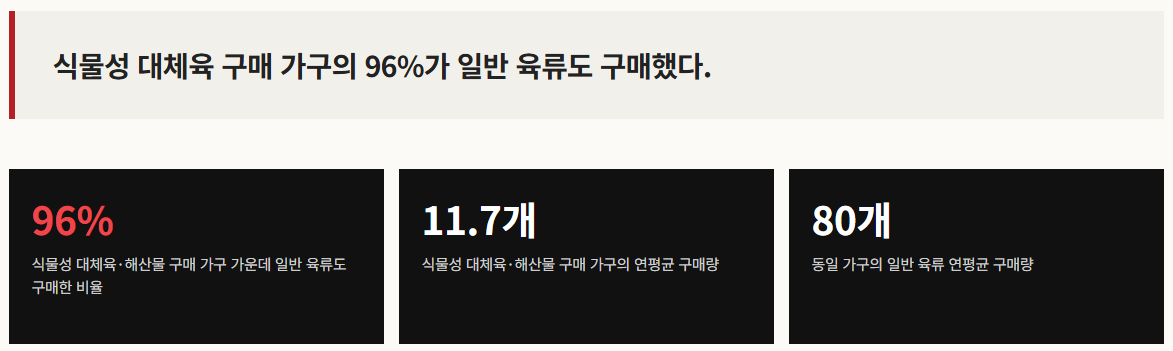
When buying 11.7 pieces of plant-based meat, you buy 80 pieces of regular meat.
There was also a significant difference in purchase volume. According to GFI, households purchasing plant-based meat and seafood alternatives bought 11.7 products in an average of about 6 purchases per year in 2025. In contrast, the same households purchased regular meat an average of 33 times per year, with a purchase volume of 80 items.
Even among consumers who have purchased plant-based meat substitutes, regular meat significantly outperforms them in terms of actual purchase frequency and quantity.
Purchased by 11% of U.S. households… Market size approximately $1 billion
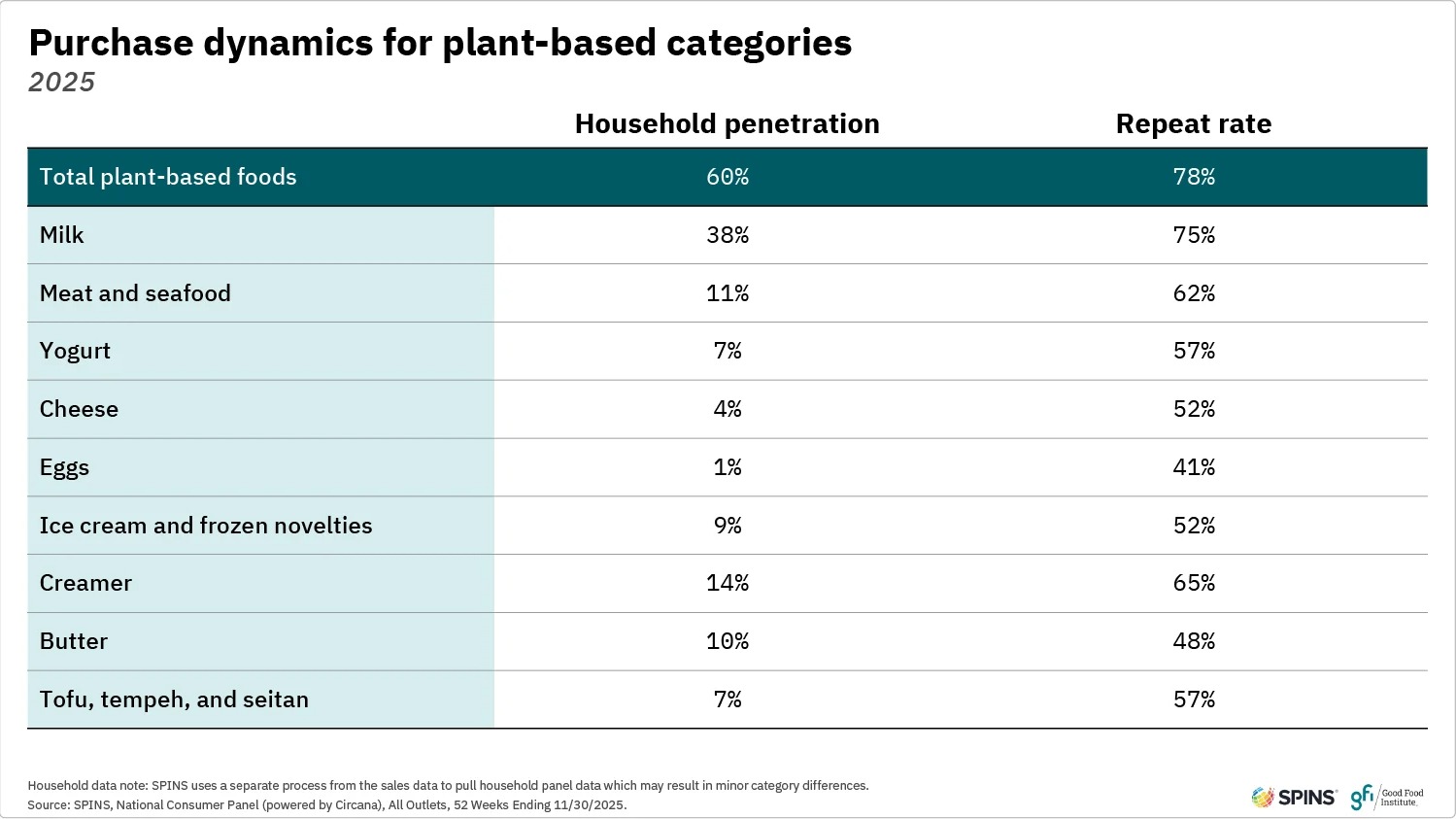
The consumption base for plant-based foods themselves is broad. By 2025, 60% of U.S. households had purchased plant-based foods at least once, and 78% of them repurchased items from the same category. The total U.S. plant-based food retail market was estimated at $7.9 billion.
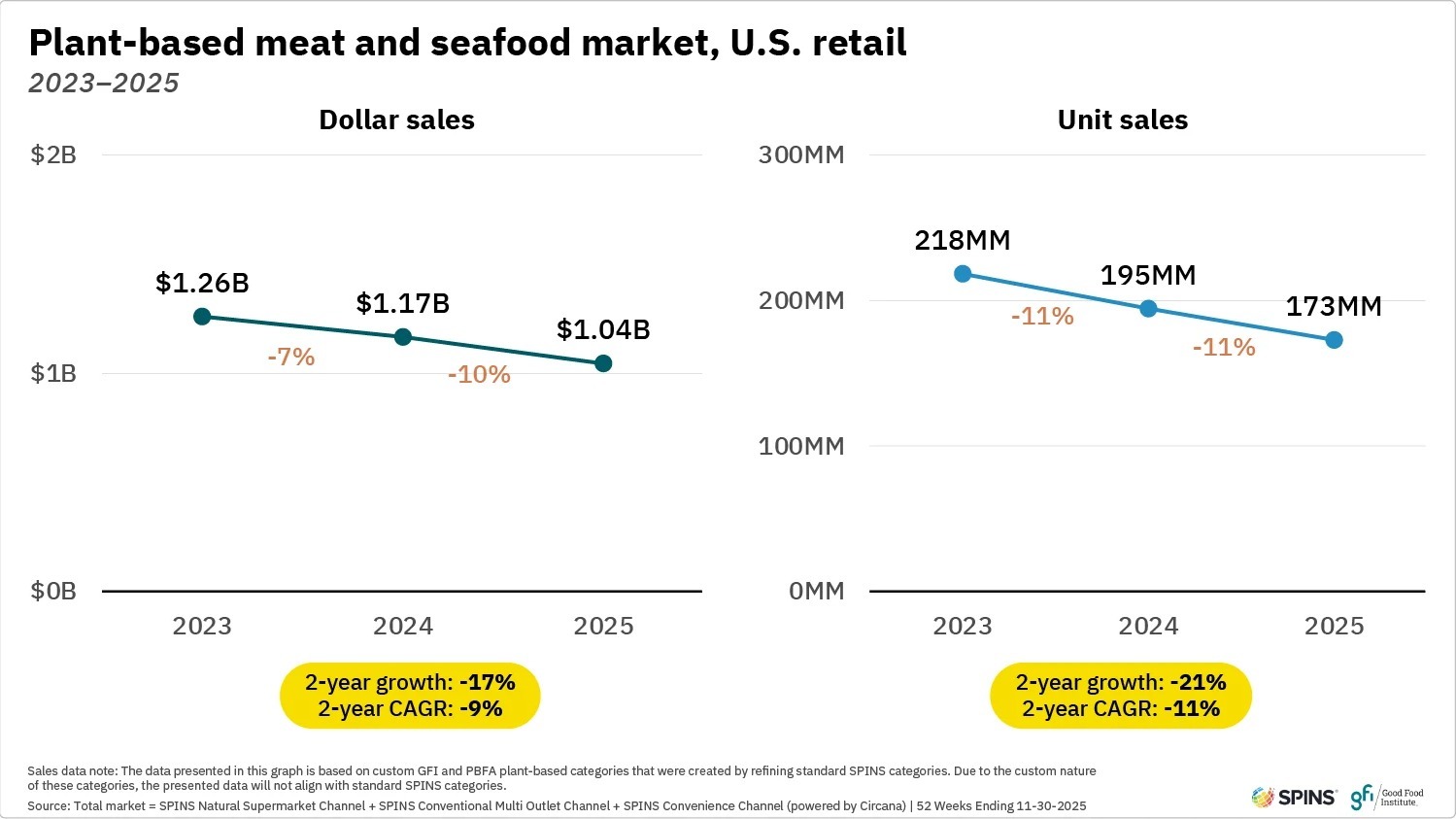
However, when narrowing the scope to plant-based meat and seafood alternatives, the purchasing household ratio was 11%. The market size was approximately $1 billion, and in 2025, sales revenue decreased by 10% and sales volume by 11% compared to the previous year.
Sales of regular meat increase… sales of alternative meat decrease
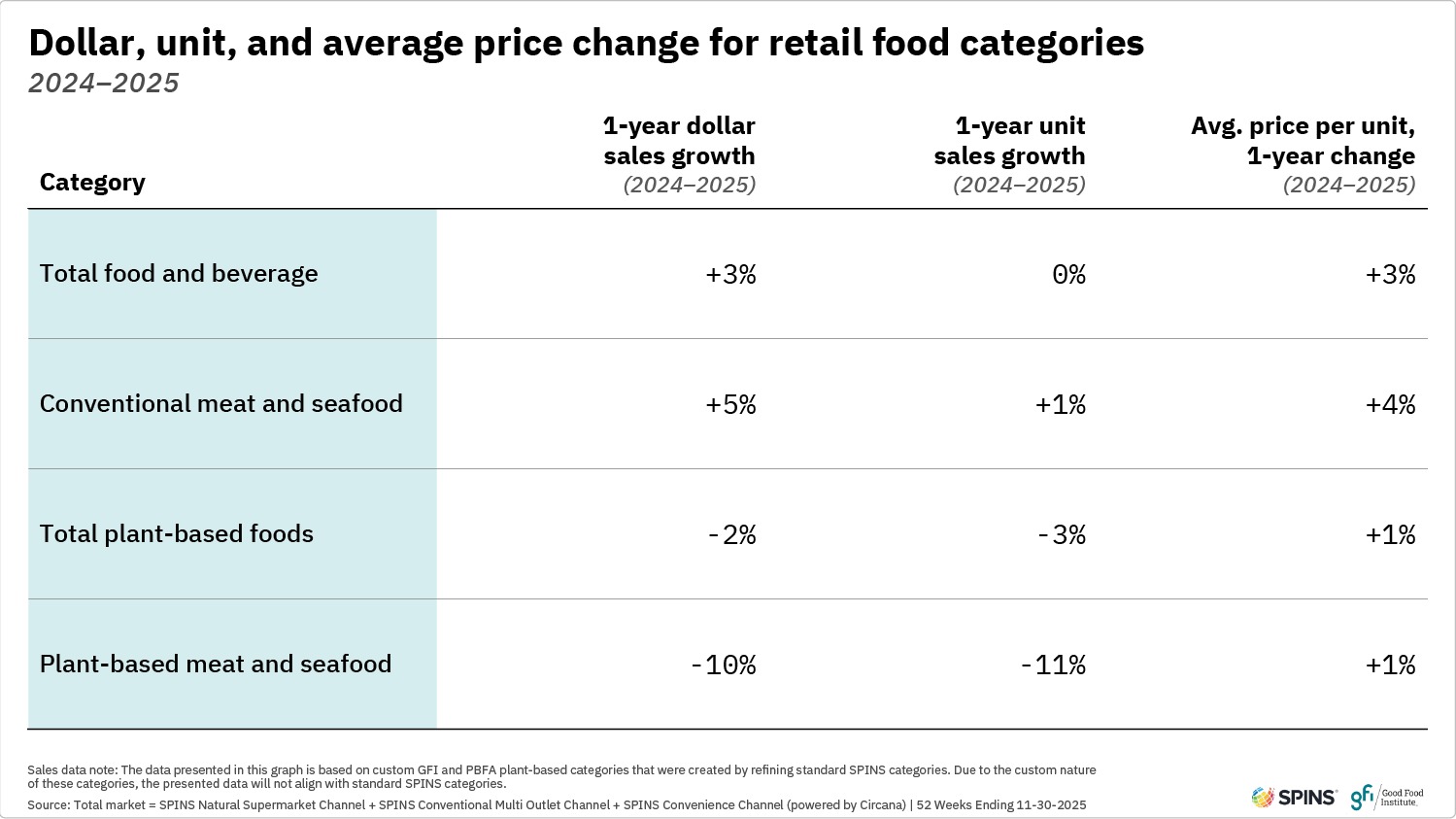
During the same period, sales of regular meat and seafood increased by 5% and sales volume by 1%. On the other hand, sales of plant-based meat and seafood decreased by 10% and sales volume by 11%, respectively.
The household penetration rate of plant-based meat and seafood alternatives has also decreased compared to the past. GFI analyzed that the percentage of purchasing households dropped from approximately 20% in 2021 to 11% in 2025. However, the repeat purchase rate of buyers in 2025 was recorded at 62%.
Price and taste remain challenges for market expansion.
GFI identified taste and price as the major challenges for the plant-based meat alternative market. Research revealed that taste is a key consideration for consumers when purchasing new plant-based meat alternative products, while price accessibility was also analyzed as a key condition for expanding purchases.
What is confirmed by the 2025 purchasing data is that the purchase of plant-based meat alternatives and animal-based meat is not mutually exclusive. Most households purchasing plant-based meat alternatives also purchased regular meat, and in terms of actual purchase volume and frequency, regular meat was higher than plant-based meat alternatives.
However, this data aggregates actual purchasing behavior and does not represent the result of a direct investigation into consumers' reasons for purchasing plant-based meat alternatives or their dietary identities. Therefore, it is not possible to determine solely from this data whether individual consumers purchased plant-based products to reduce their meat consumption.

Published by: 농촌경제연구원 (2026)
- #축산물
- #유통
- #품질관리
- #기술
Related Content

Meat Culture & Trends
“Dawn of the Era of Hansik 3.0”… The 1st Hansik Day Declares a New Future for K-Food
At the 1st Korean Food Day ceremony in 2026, the government announced the ‘Korean Food 3.0’ vision. At the Korean Food Conference, Bibigo’s global strategy and chefs’ plans for the globalization of Korean food were discussed.
2026.10.26
Meat Culture & Trends
Marinated beef is being pushed off the dining table... The 'land of grilled meat' is turning into the 'land of solo dining'.
Based on three years of OpenSurvey Food Diary data (June 2022–May 2025), changes in seasoned meat consumption were tracked across 20 detailed menu items for four livestock types: beef, pork, chicken, and duck. The conclusion is simple: while spicy seasoned pork and chicken are growing as convenience foods, it was difficult to find beef menu items with growth potential in terms of seasoned meat.
2026.9.30