
DAILY BRIEF
1,000 Excellent Overseas Korean Restaurants Designated Over 5 Years… Linked to Exports of Domestic Food Ingredients
Ministry of Agriculture, Food and Rural Affairs Announces Measures to Strengthen Competitiveness of Overseas Korean Restaurants… Introduces Two-Tier Grading System: Recommended and Excellent
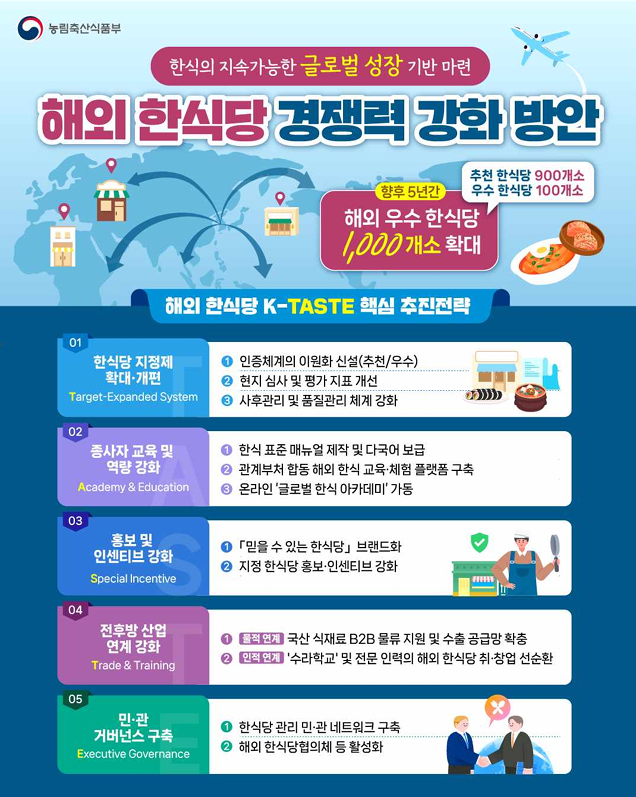
The government plans to expand the number of excellent Korean restaurants overseas to 1,000 over the next five years and foster them as hubs for the export of domestic ingredients and the overseas expansion of Korean food professionals.
On the 20th, the Ministry of Agriculture, Food and Rural Affairs announced the ‘Plan to Strengthen the Competitiveness of Overseas Korean Restaurants,’ which includes these details.
This measure was devised to enhance the quality and service standards of overseas Korean restaurants amidst rising global consumption of Korean food, and to connect the popularity of Korean cuisine to sustainable industrial growth.
According to the Ministry of Agriculture, Food and Rural Affairs, awareness of Korean food among overseas consumers rose from 60.0% in 2023 to 68.6% in 2025. The consumption base is also expanding to include not only bibimbap and bulgogi, but also chicken, tteokbokki, and gimbap.
First, the government will expand the existing ‘Designation System for Excellent Overseas Korean Restaurants,’ which focuses on high-end Korean restaurants, to include popular Korean restaurants. It will introduce a two-tier grading system in which a ‘Recommended Grade’ is awarded if service and hygiene standards above a certain level are met, and an ‘Excellent Grade’ is awarded if additional requirements, such as the use of domestic ingredients, are also met.
The designation requirements will also be relaxed. The operating period standard will be lowered from the existing three years to one year, and an evaluation system utilizing local agencies, such as aT's overseas branches, will be established. The validity period of the designation will be set at three years, and plans are in place to inspect the operating status and any violations of hygiene-related laws annually.
In particular, support will be strengthened to utilize overseas Korean restaurants as a stable export market for domestic ingredients.
We will utilize 31 overseas Korean restaurant associations currently operating in 22 countries to identify demand for the joint purchase of domestic ingredients and support transaction linkages between domestic food export companies, local importers and distributors, and Korean restaurants. We also plan to link the usage of domestic ingredients with the evaluation of Korean restaurant designations and support programs.
In addition, by the second half of 2027, a ‘Korean Food Digital Library’ providing multilingual cooking manuals and educational videos will be established, and a mobile-based ‘Global Korean Restaurant Academy’ will also be operated.
A ‘Global Korean Restaurant Map’ will also be prepared, allowing users to check the locations and signature menus of designated Korean restaurants by country and city, and will be integrated with local map and reservation services.
Jeong Gyeong-seok, Director General of Food Industry Policy at the Ministry of Agriculture, Food and Rural Affairs, stated, “Securing the competitiveness of overseas Korean restaurants is crucial for the global popularity of K-Food to move beyond a temporary trend and lead to sustainable growth,” adding, “We will expand the number of Korean restaurants that people around the world trust and seek out through the reform of the designation system and customized support.”
- #정책
- #유통
Related Content
DAILY BRIEF
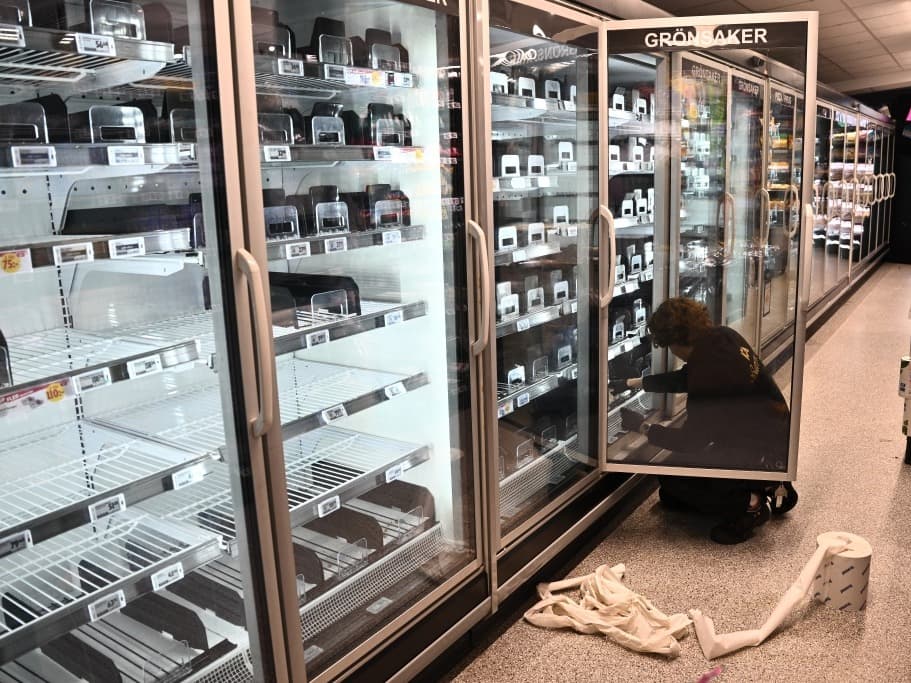
Cyberattacks on European Cold Storage Facilities Continue… EU Urges Urgent Security Measures
European Union (EU) authorities have launched a joint response following a series of cybersecurity incidents targeting commercial refrigeration facilities in Europe. Digital security for refrigeration equipment is also emerging as a major management challenge in distribution sites handling temperature-sensitive foods, such as meat.
2026.11.6
DAILY BRIEF
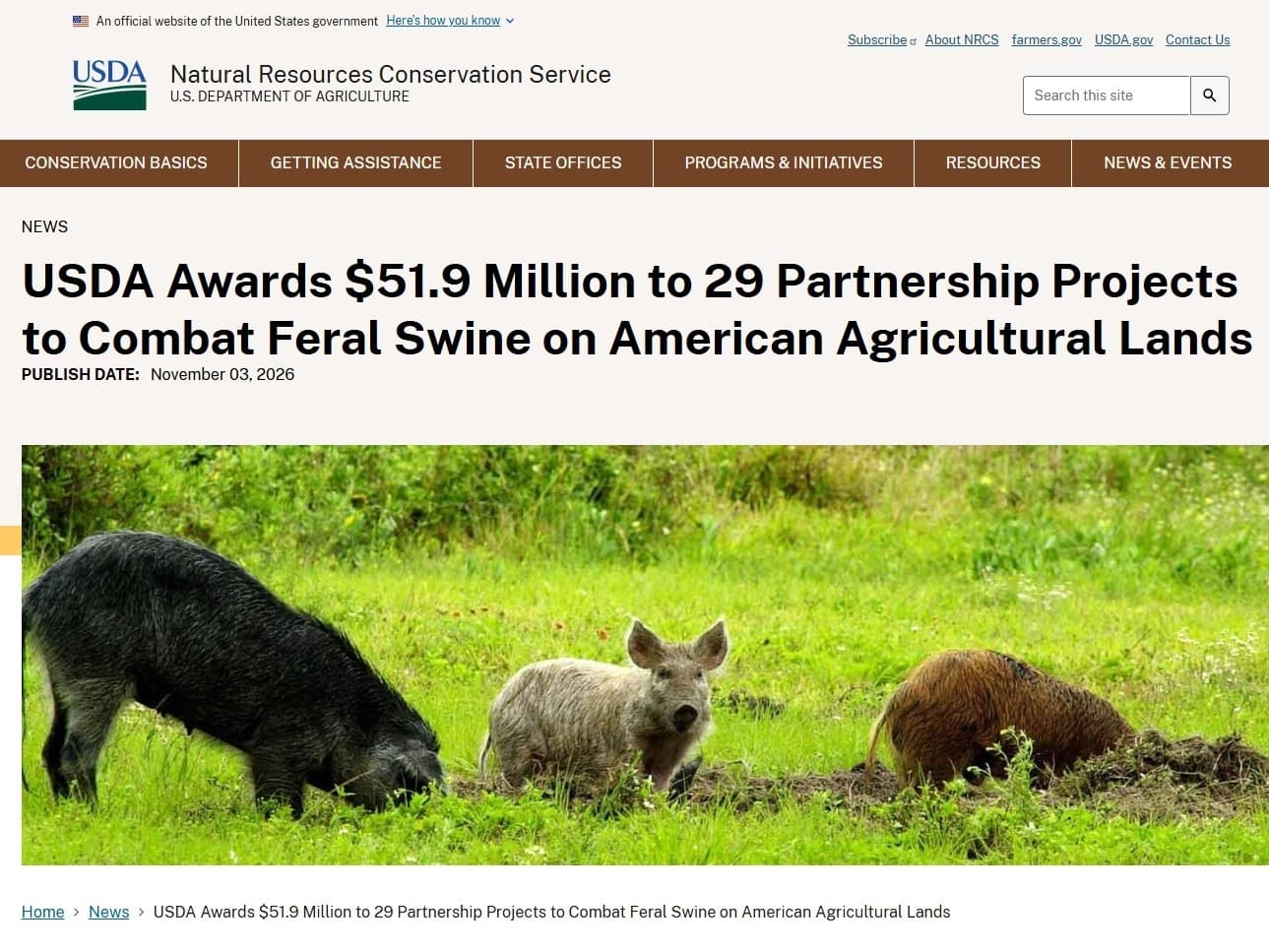
U.S. USD Provides $51.9 Million for Wild Boar Control and Management
The U.S. Department of Agriculture (USDA) is providing a total of $51.9 million to 29 cooperative projects in 13 states to reduce agricultural damage caused by wild boars and protect the health of livestock and people.
2026.11.6
DAILY BRIEF
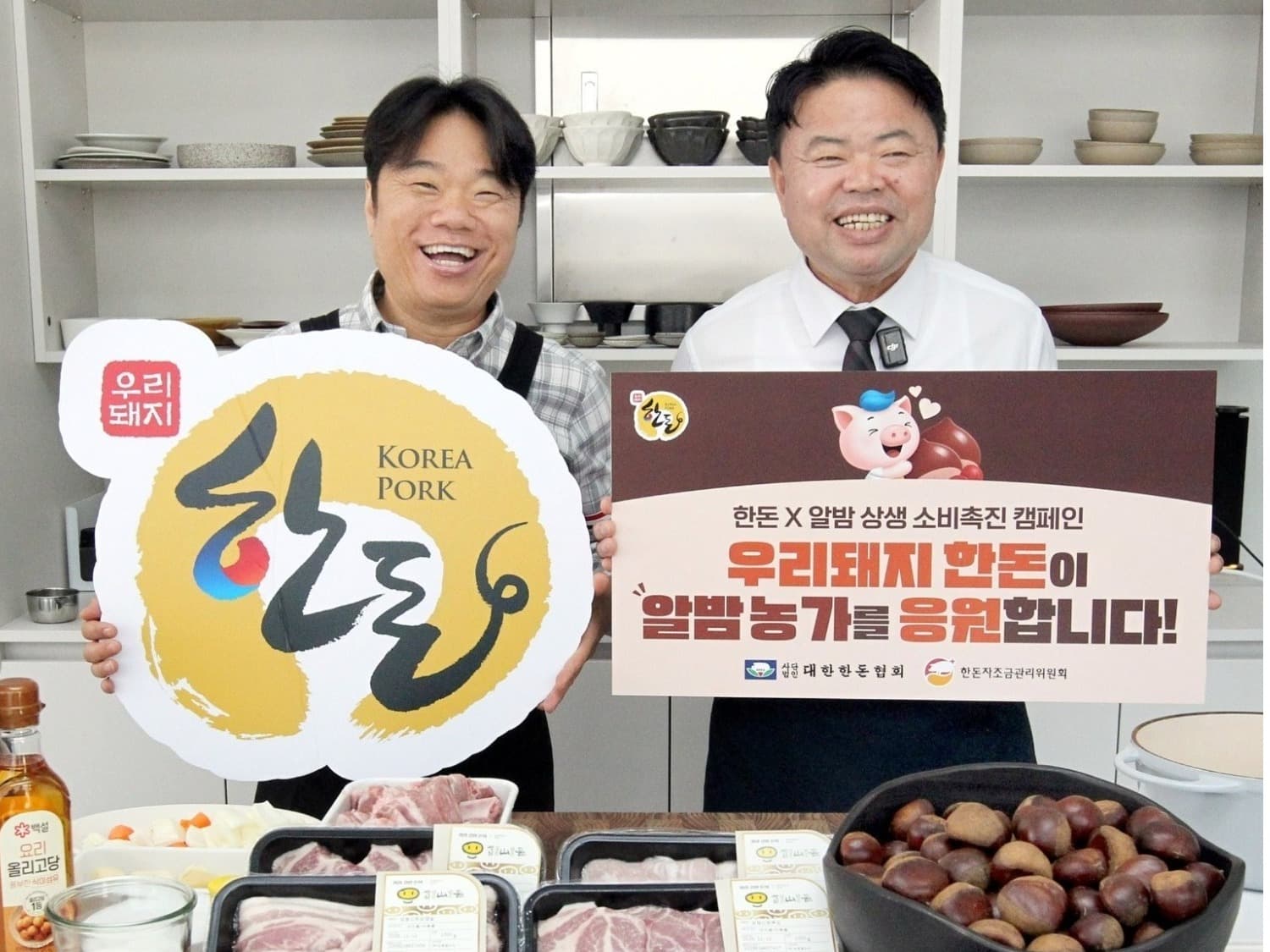
The Meeting of Korean Pork and Domestic Chestnuts… ‘Ok-Jubu’ Jung Jong-cheol Unveils 3 Dishes for Coexistence
The Korea Pork Self-Funding Committee announced on the 6th that it filmed special cooking content for ‘Han-don x Our Night’ on November 5th with comedian Jung Jong-chul, an honorary ambassador for Han-don, and Chairman Lee Ki-hong.
2026.11.6