
DAILY BRIEF
Philippines Pushes for Phased Increase in Pork Import Tariffs… Up to 40% by 2028
Pushing to apply 25% to within quotas and 35% to excess volumes in 2027… to increase to 30% and 40%, respectively, in 2028.
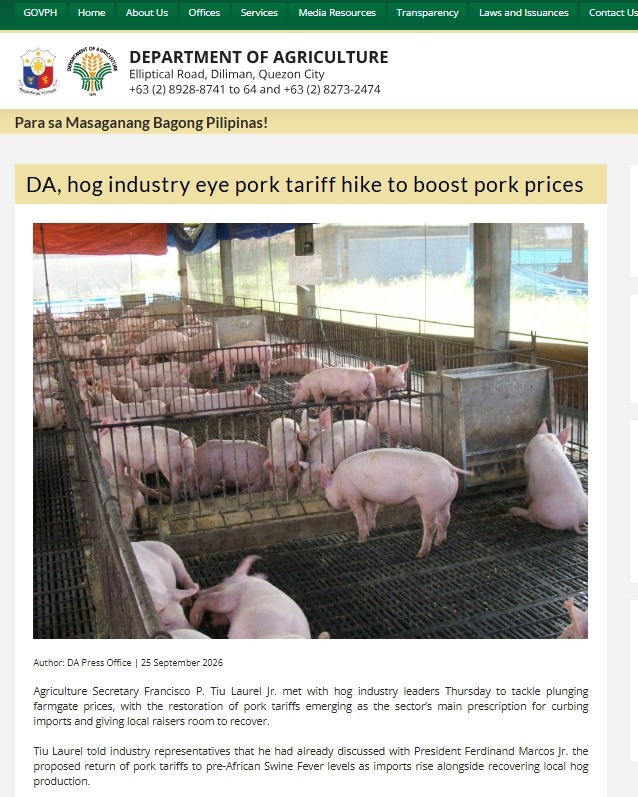
The Philippine government is pursuing a plan to gradually increase import tariffs on pork to protect its domestic pig farming industry. The plan is to raise the current tariffs of 15–25% to 25–35% in 2027, and then to a maximum of 40% in 2028.
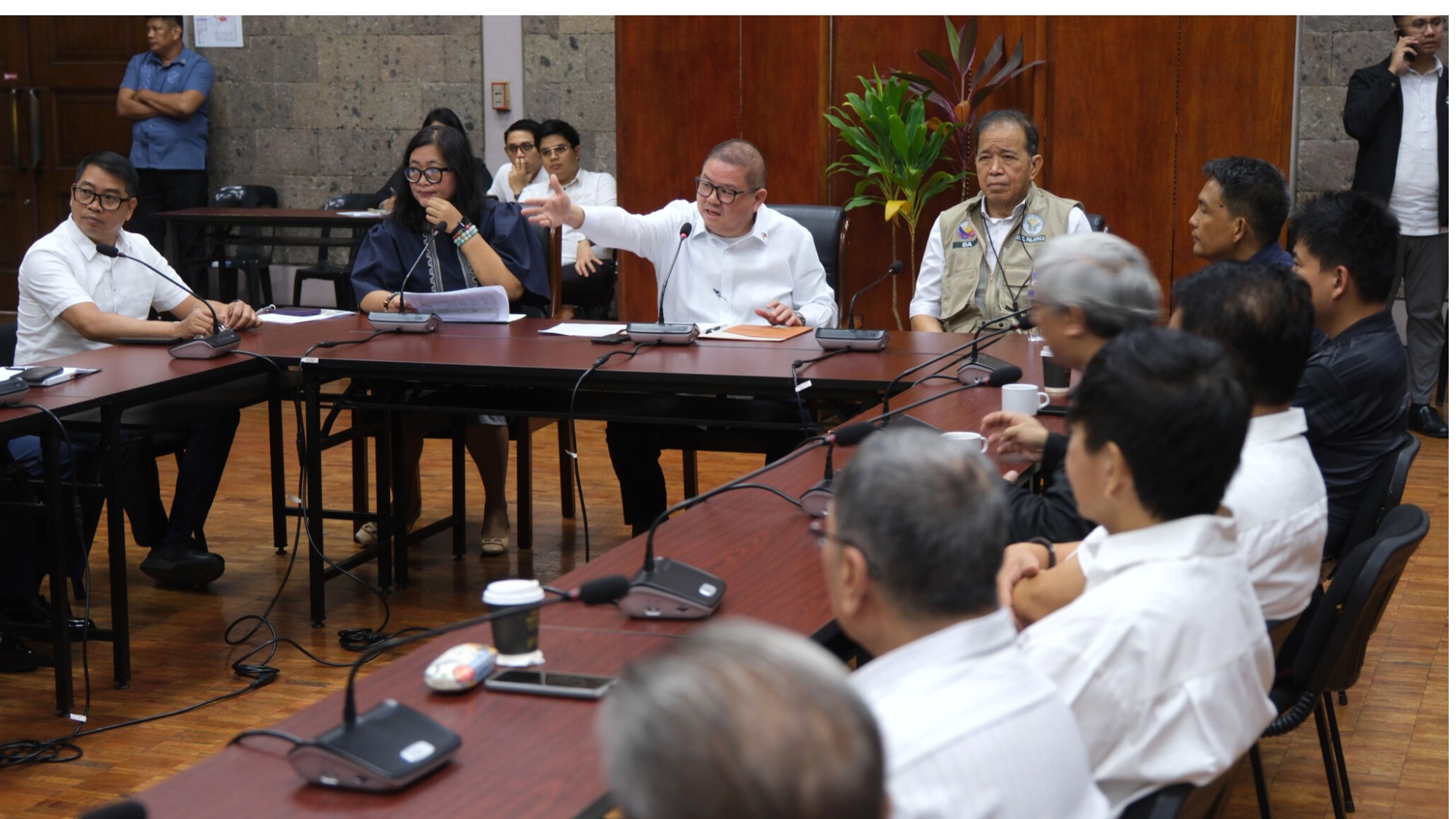
The Philippine Department of Agriculture (DA) projected at a Tariff Commission public hearing on October 12 that it could secure more than 10 billion pesos in additional tax revenue if the tariff increase is confirmed. The government plans to use the secured funds to strengthen the competitiveness of the livestock industry.
The purpose of this tariff adjustment plan is to restore import tariffs that had been lowered following the outbreak of African Swine Fever (ASF) and to support the recovery of the domestic pig farming base. However, the proposed increase isIt is still in the review stage, and the final tax rate and implementation status have not been determined.
Pork Imports on the Rise… to Surpass 850,000 Tons by 2025
The push to raise tariffs is driven by increased imports and falling farmgate prices for domestic pig farmers. According to data from the Philippine Bureau of Animal Industry (BAI), pork imports in 2025 are projected to reach 851,760 tons, a 16.1% increase from 733,729 tons in 2024.
Pork imports for January to August 2026 also reached 602,655 tons, a 5.2% increase from 573,091 tons during the same period of the previous year. These import statistics include by-products and fat in addition to cuts of meat.
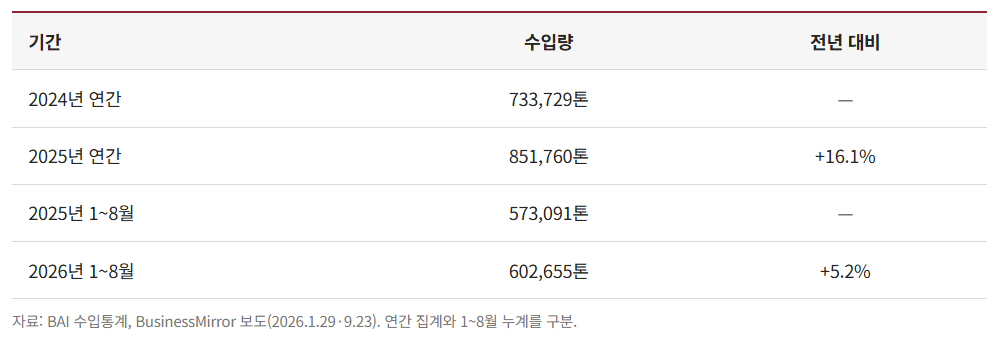
Of the import volume in 2025, pork cuts amounted to approximately 358,880 tons, and by-products to approximately 267,744 tons.
Meanwhile, according to the Department of Agriculture, pork production in the Philippines in the first half of 2026 increased by 6% compared to the same period of the previous year. However, farmgate prices for pigs fell by about 30%, from 215 pesos per kg in June 2025 to 150 pesos in August 2026.
Government Expects Over 10 Billion Pesos in Additional Tax Revenue from Tariff Hike
At a public hearing on October 12, the Ministry of Agriculture estimated that the government could secure more than 10 billion pesos in additional tax revenue by raising tariffs. The government explained that these funds could be used for the Animal Industry Competitiveness Fund (AnCEF) to restore the livestock farming base and improve disease prevention and productivity.
AnCEF is an annual fund worth 20 billion pesos that supports the modernization of the livestock, poultry, and dairy industries. The Ministry of Agriculture stated that approximately 3.64 billion pesos has been allocated to the recovery of the pig farming base.
The Ministry of Agriculture expects that this project will increase annual pork production by 100,000 tons and reduce dependence on imports. However, the targets for additional production and import reduction are government estimates, not actual achievements.
The pork industry welcomes the move… but the import industry is concerned about rising consumer prices.
The Philippine pork industry is demanding tariff increases, arguing that the influx of imported meat is putting pressure on domestic farmgate prices. In addition to tariff adjustments, the industry has proposed measures such as strengthening inspections of imported frozen meat, expanding oversight of declarations for low-tariff items, and restricting import volumes for a certain period.
On the other hand, the Meat Importers & Distributors Association of the Philippines (MITA) expressed concern that high tariffs could raise consumer prices and costs for meat processing and food service businesses. The association is calling for measures to maintain the current low tariffs beyond 2028.
From a policy of expanding imports after ASF to protecting the domestic pig farming industry
The Philippines has been expanding pork imports through measures such as lowering import tariffs as pig farming and domestic supply contracted due to the outbreak of African Swine Fever (ASF) in 2019. Since then, as production has recovered and imports have continued to rise, the government is adjusting its policy to raise tariff levels again.
If this proposed price hike is finalized, it could affect import costs for overseas exporters supplying pork to the Philippines as well as local meat processing and distribution companies. The impact on actual import volumes and consumer prices is expected to vary depending on the final tariff rate, exchange rates, and local supply and demand conditions.
The results of the Philippine Customs Commission's deliberations and the government's final decision are considered key variables that will affect the future pork import market.
Source of information
Related Content
DAILY BRIEF
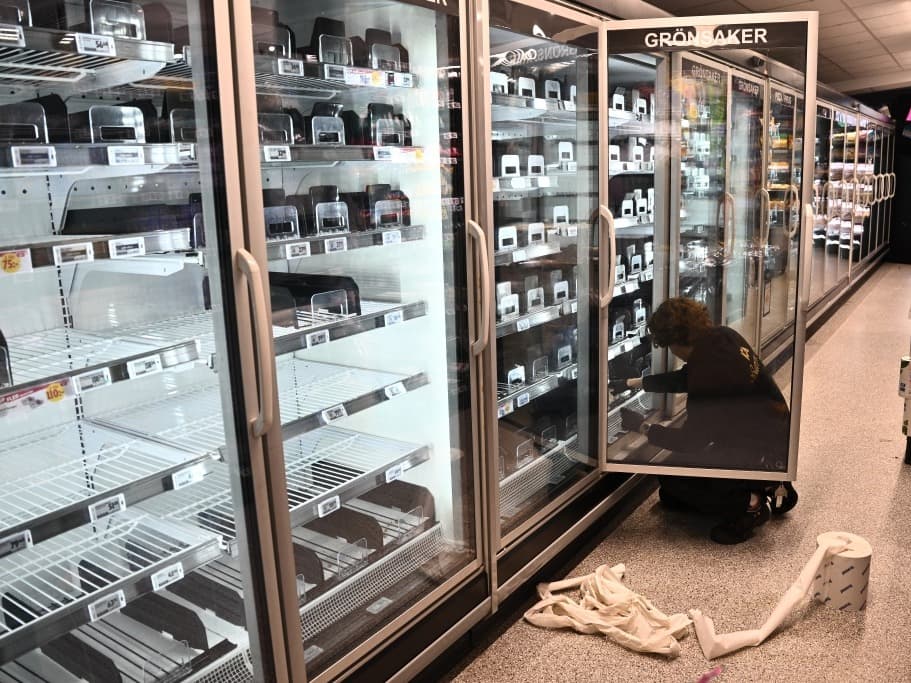
Cyberattacks on European Cold Storage Facilities Continue… EU Urges Urgent Security Measures
European Union (EU) authorities have launched a joint response following a series of cybersecurity incidents targeting commercial refrigeration facilities in Europe. Digital security for refrigeration equipment is also emerging as a major management challenge in distribution sites handling temperature-sensitive foods, such as meat.
2026.11.6
DAILY BRIEF
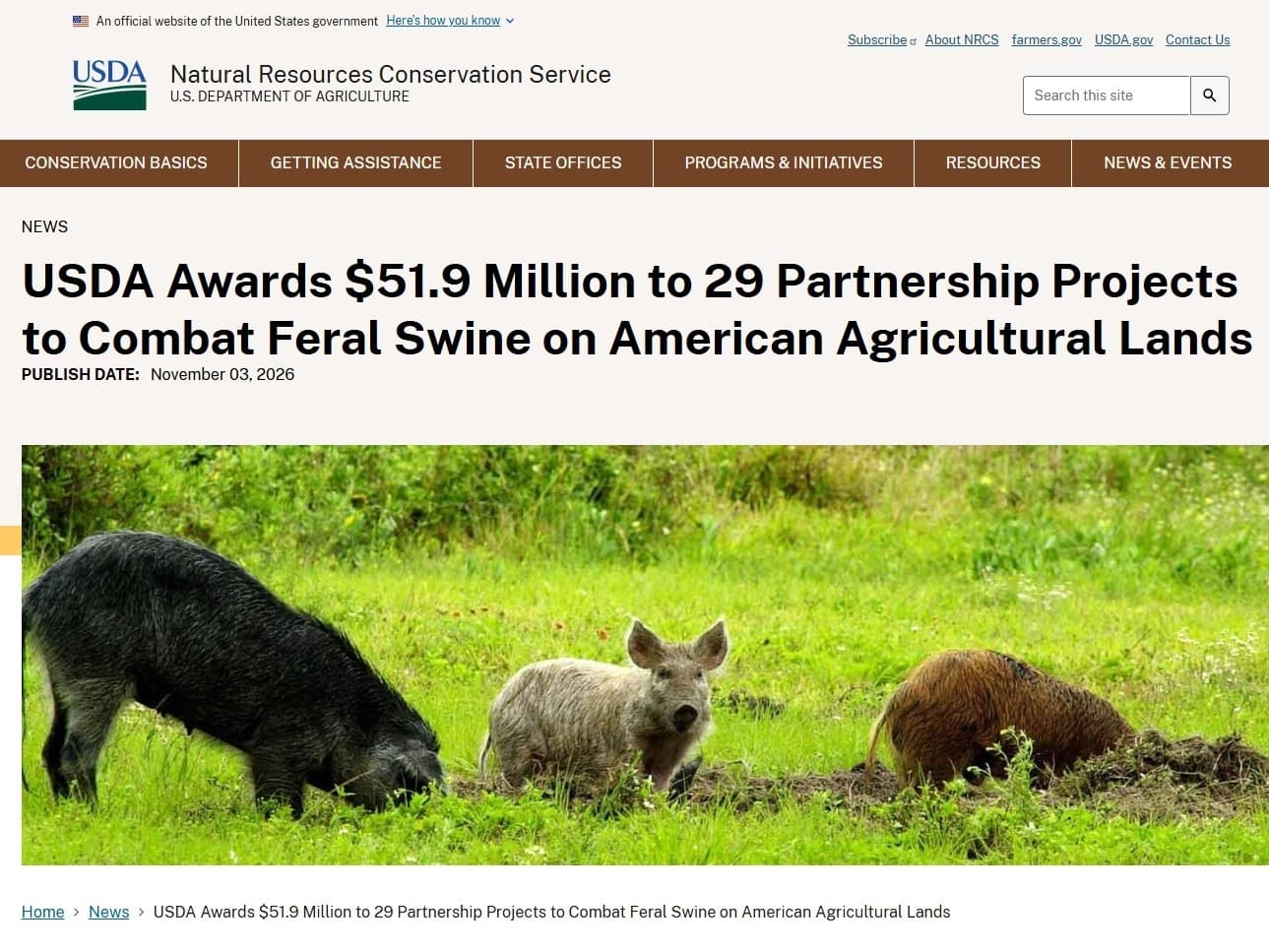
U.S. USD Provides $51.9 Million for Wild Boar Control and Management
The U.S. Department of Agriculture (USDA) is providing a total of $51.9 million to 29 cooperative projects in 13 states to reduce agricultural damage caused by wild boars and protect the health of livestock and people.
2026.11.6

DAILY BRIEF
The Meeting of Korean Pork and Domestic Chestnuts… ‘Ok-Jubu’ Jung Jong-cheol Unveils 3 Dishes for Coexistence
The Korea Pork Self-Funding Committee announced on the 6th that it filmed special cooking content for ‘Han-don x Our Night’ on November 5th with comedian Jung Jong-chul, an honorary ambassador for Han-don, and Chairman Lee Ki-hong.
2026.11.6