
On-site coverage
1,321 Tons of Korean Pork to Be Released Over ‘100 Days’… Will It Serve as a Supply ‘Buffer’ for Q4?
Comprehensive discount sales from October to December at large supermarkets, Handon Mall, certified stores, Nonghyup, etc.
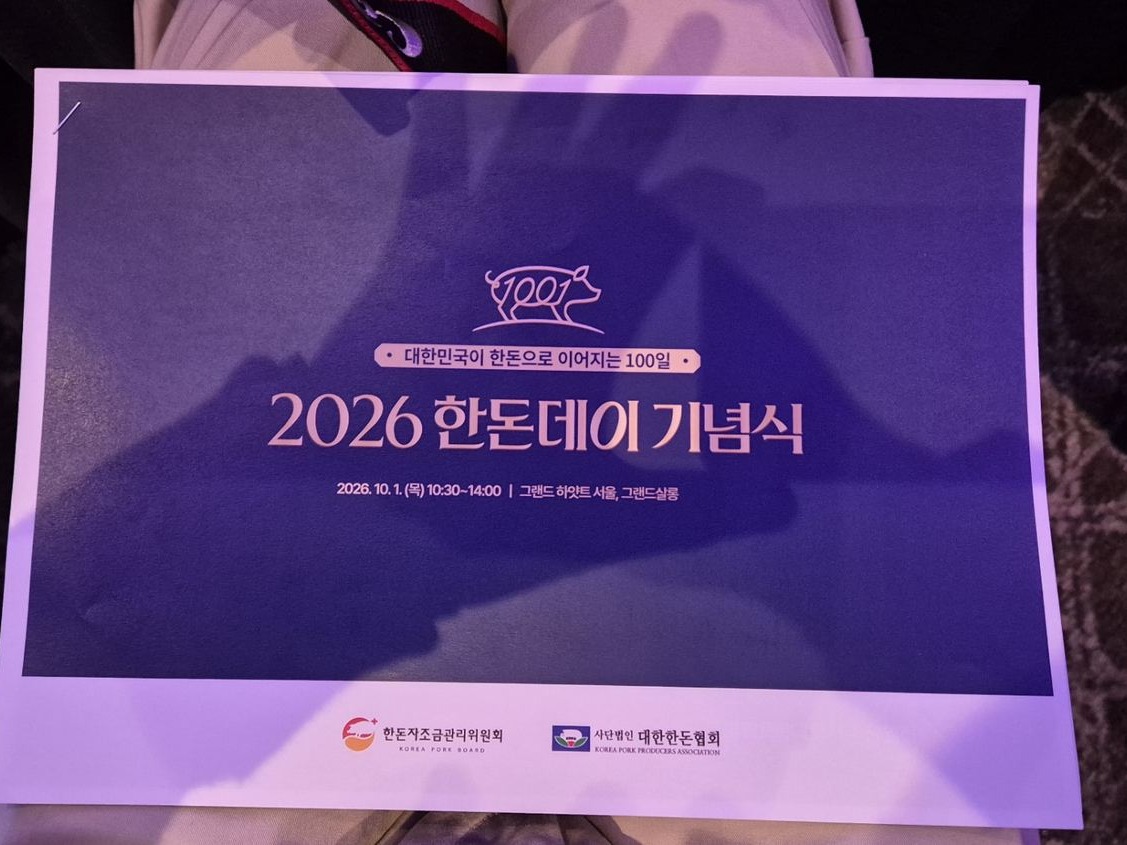
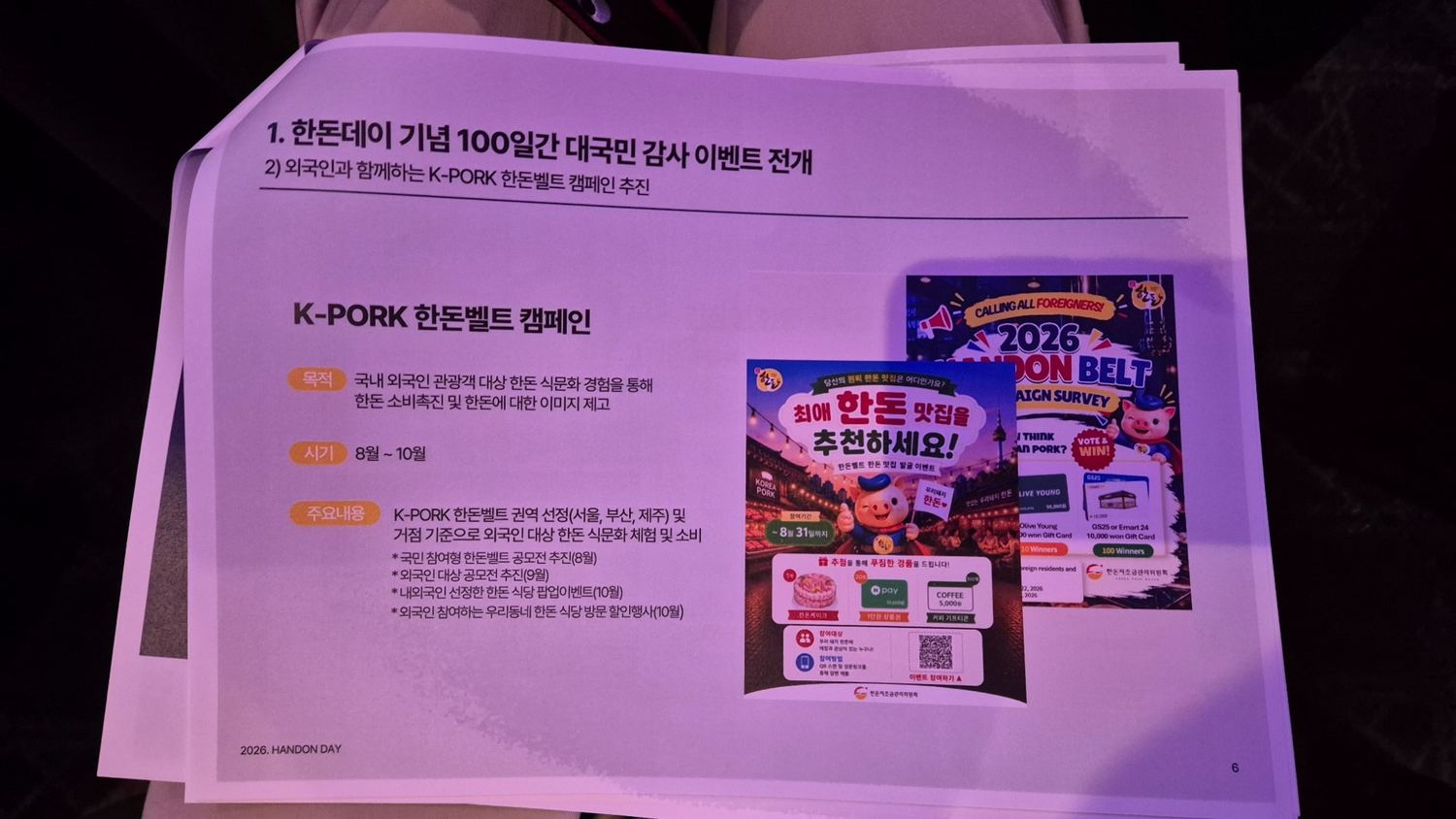
Field materials distributed at the 2026 Han-don Day event under the theme ‘100 Days of Korea Connected to Han-don.’ Consumption promotion strategies linking discounts, tourism, festivals, sharing, school meals, and exports were presented for the period from October to December.
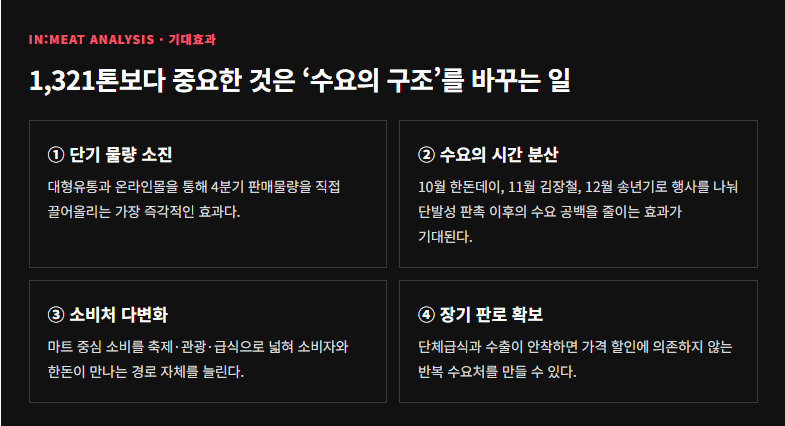
The follow-up program for ‘2026 Han-don Day’ focuses on generating demand for Han-don across various channels in the fourth quarter, rather than simply holding a commemorative event. In particular, the planned consumption volume for discounted sales from October to December alone amounts to 1,321 tons. On top of this, initiatives have been added, including the K-PORK Han-don Belt targeting foreign tourists, regional festivals, Kimchi sharing events, expansion of institutional catering, and the development of export markets.
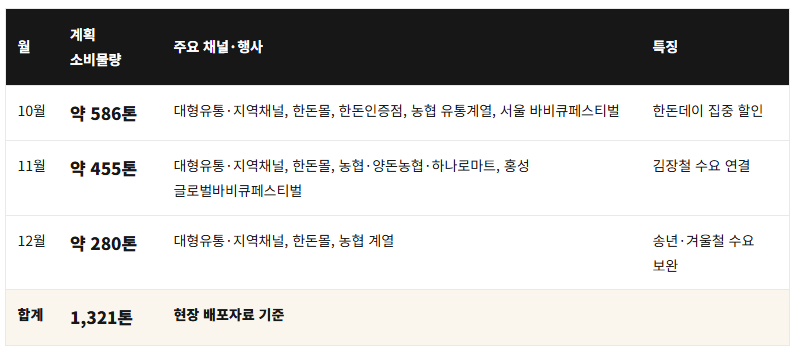
1,321 tons in discount sales alone… Largest release in October
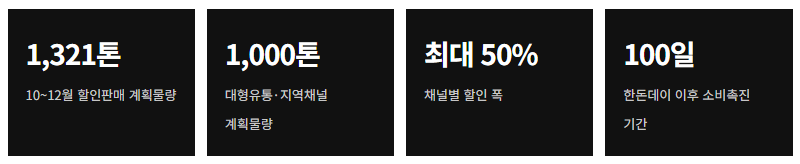
According to materials distributed at the site, the estimated consumption volume for discount sales from October to December is a total of 1,321 tons. With approximately 586 tons in October, 455 tons in November, and 280 tons in December, the largest volume was allocated in October, which includes Han-don Day.
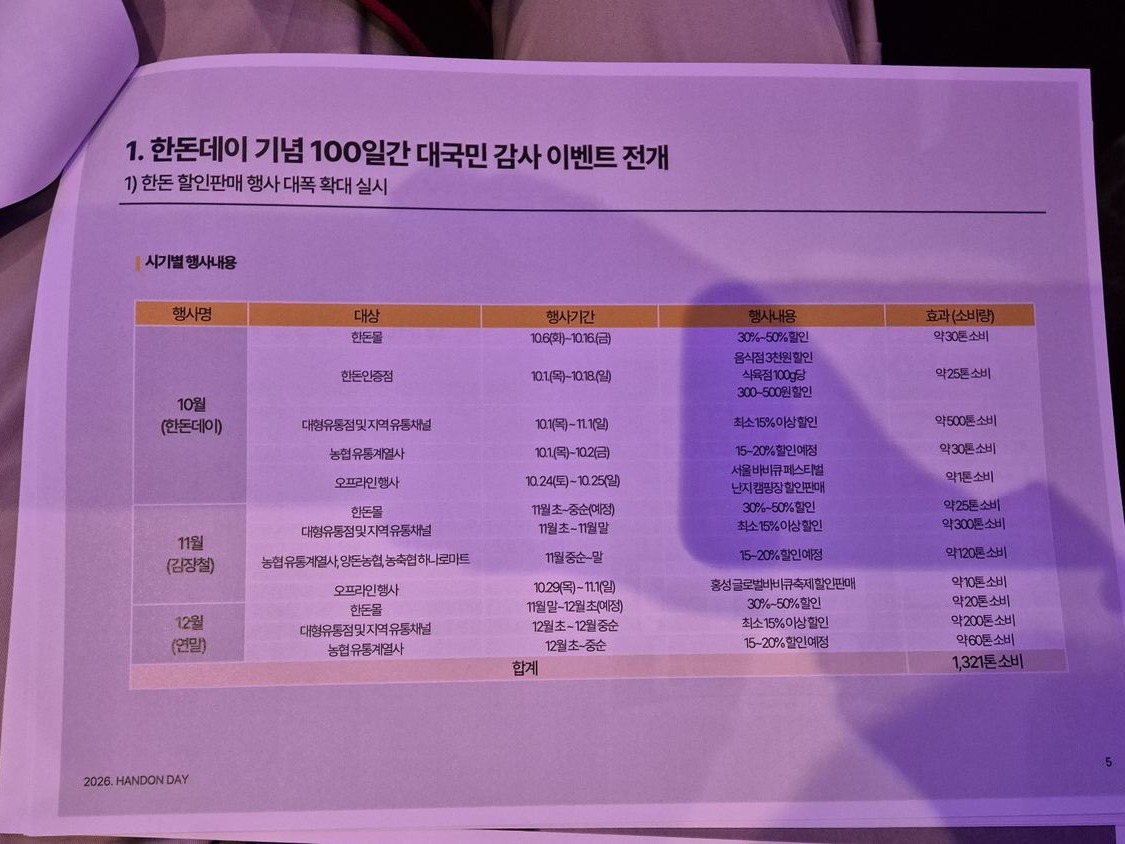
Of this, the planned volume for large retailers and regional distribution channels accounts for a total of 1,000 tons, with 500 tons in October, 300 tons in November, and 200 tons in December. This approach expands consumer touchpoints by adding Handon Mall, certified Handon stores, Nonghyup distribution affiliates, and offline festival discount sales.
Korean pork comes out of the supermarket… Turning local festivals from ‘promotion → experience → purchase’
The 100-Day Project does not wait for consumers only inside supermarkets. It connects the promotion, experience, and sales of Korean pork with local festivals such as the Jeju Dosaegi Festival, Gangwon Handon Festa, Seoul Barbecue Festival, and Hongseong Global Barbecue Festival.

The structure involves promoting the quality and safety of Korean pork at on-site booths, attracting participation through cooking contests and hands-on programs, and ultimately connecting to the sales booths. Another expected benefit is the ability to leverage existing visitors to local festivals, allowing for a faster expansion of touchpoints compared to attracting new consumers.
Foreign tourists also becoming a consumer group… K-PORK Korean Pork Belt
The ‘K-PORK Handon Belt’ is a campaign designed to allow foreign tourists visiting Korea to experience Korean pork culture. Designating Seoul, Busan, and Jeju as key regions, the campaign identifies top-rated Korean pork restaurants recommended by both domestic and international visitors, and then links pop-up events with in-store discount promotions centered around these selected establishments.
The Kimjang season links the ‘demand for boiled pork’ with sharing.
During the Kimjang season, consumption promotion and social contribution are combined. Field materials suggest initiatives such as sharing boiled pork linked to Kimjang with social welfare institutions, orphanages, and non-profit organizations, supporting the National Assembly’s "Vibrant Vegetable Garden" event, and regional ESG sharing events.
While the scale may be smaller than discount events in terms of solely expanding consumption, it is significant in creating repeat demand by combining Korean boiled pork with the seasonal food culture of Kimjang. It is a strategy that creates an opportunity to eat in a way distinct from price discounts.
institutional catering fills winter demand gap… expanding consumption range to include front and hind legs
The document suggests supporting the expanded use of Korean pork in institutional meals, targeting the period from December to February when demand decreases due to school holidays and reduced social gatherings, while supply may increase. The target cuts include not only pork belly and neck but also all cuts of meat such as shoulder and hind leg.If this project leads to an actual increase in usage, two effects can be expected. It compensates for the decrease in demand during the winter season while simultaneously alleviating the structure where consumption is concentrated on pork belly and pork neck. It is significant in that it promotes the balanced consumption of the entire pig, rather than just specific popular cuts.
Will not rely solely on domestic demand… Export markets also a separate axis
The field materials also included plans to pioneer and revitalize export markets for Korean pork to proactively counter the shrinking domestic market. Based on export performance following quarantine negotiations in Singapore, the plans involve expanding export marketing support, inviting buyers, and developing markets in Hong Kong, Mongolia, Singapore, and the Philippines.
Even if export volumes are not yet large compared to domestic consumption, expanding export destinations and sales channels in advance can serve as a safety net to distribute the burden of domestic supply and demand in the long run. In particular, the significance of export markets is bound to grow as domestic consumption stagnates.
The entire fourth quarter as a single consumption calendar
Based on the data, the characteristic of this 100-day project is that instead of operating individual events separately, it has combined the Han-don Day in October, the Kimjang season in November, and the year-end season in December into a single consumption calendar.
In the short term, the most obvious effect is the discount sale of 1,321 tons. However, a more important industrial evaluation will be possible after 100 days. We need to see whether consumers who purchased once at a discount choose Korean pork again, whether consumers encountered at local festivals lead to consumption at restaurants and certified stores, and whether school meals and exports remain as repeatable sources of demand.
Conversely, if only large-scale discounts remain and consumption returns to its original level after the campaign ends, the 100-day project is unlikely to have any significance beyond a prolonged large-scale promotional event.
Ultimately, the success or failure of this business depends more on ‘how cheaply it was sold’ thanHow many new outlets for Korean pork have been left?It should be evaluated as such. If successful, it could serve as a testbed for a new consumption strategy that expands the demand base itself by connecting distribution, dining, tourism, catering, and exports, moving away from the approach of responding with short-term discounts whenever prices drop.

- #축산물
- #정책
- #유통
Related Content
On-site coverage
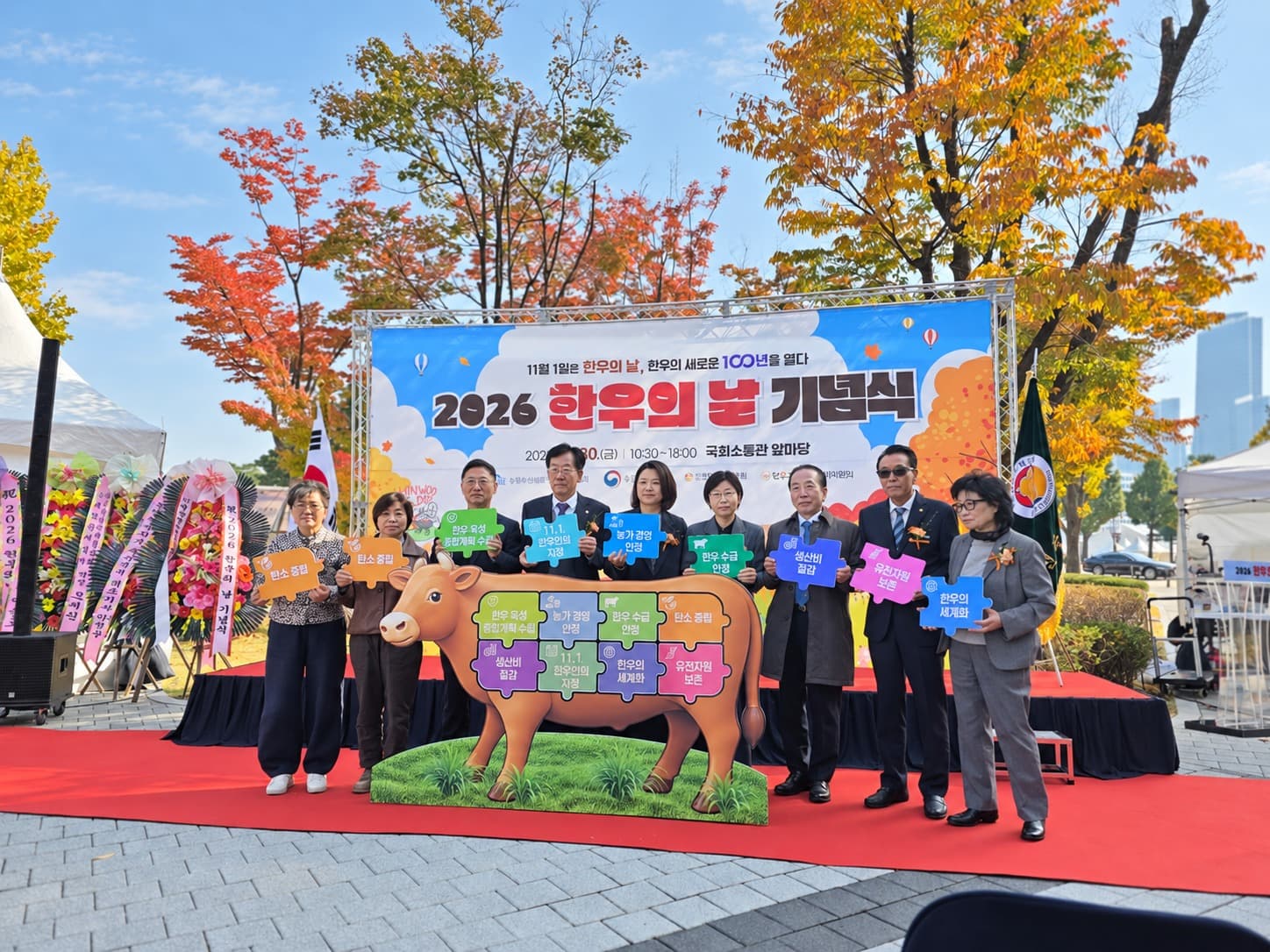
Hanwoo Association to Hold 'Hanwoo Professionals' Day' Ceremony at National Assembly on October 30… Pledges a New Century for the Industry
The National Hanwoo Association held a ceremony commemorating the first statutory Hanwoo Day at the plaza in front of the National Assembly Communication Center on October 30.
2026.10.31
On-site coverage
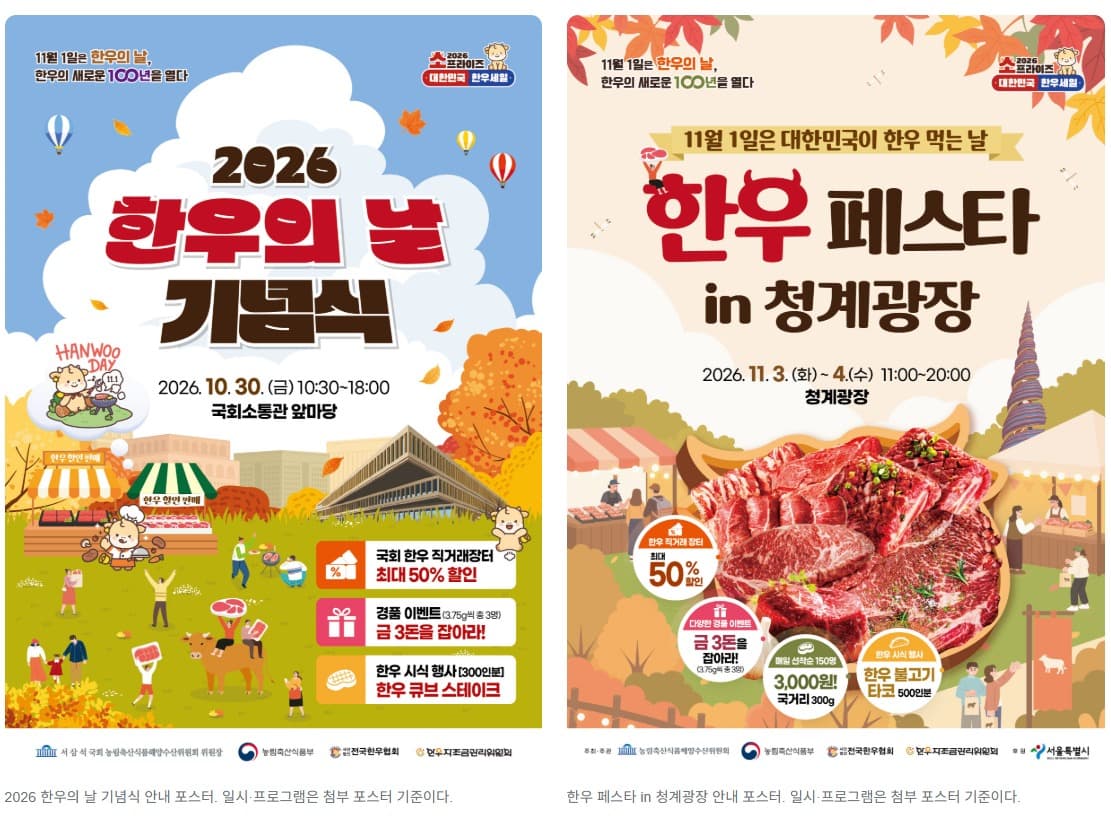
‘Sorprise’ Ahead of Hanwoo Day… Up to 63% Off at 1,811 Locations Nationwide
Ahead of ‘Korean Beef Day’ on November 1, discount events for Korean beef are being held at online and offline stores nationwide. The Ministry of Agriculture, Food and Rural Affairs announced on October 27 that it will hold the ‘So-prize Korea Hanwoo Sale’ for 12 days from October 28 to November 8.
2026.10.27
On-site coverage
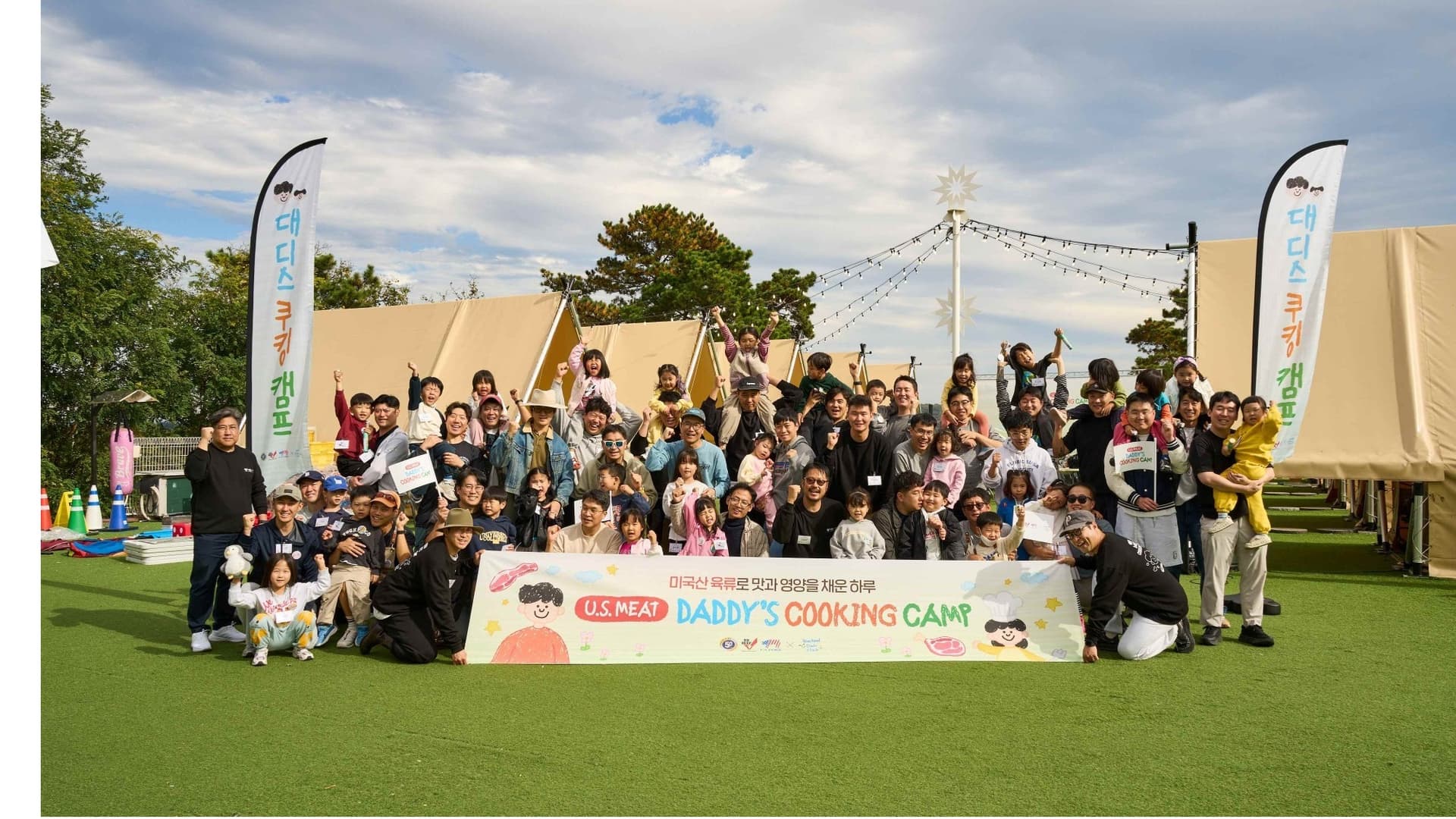
Making Meatballs and Stacking Burgers... USMEF, "Gifts a Delicious Day to Closer to Dad"
2026.10.25