
Global Field Report
South American Beef Makes a Strong Presence… Meat Export Competition at SIAL Paris 2026
Brazil, Uruguay, and Argentina contact buyers using joint pavilions
Overseas Correspondent: CEO Kang Seong-hun (Neo Kang) of CN Company

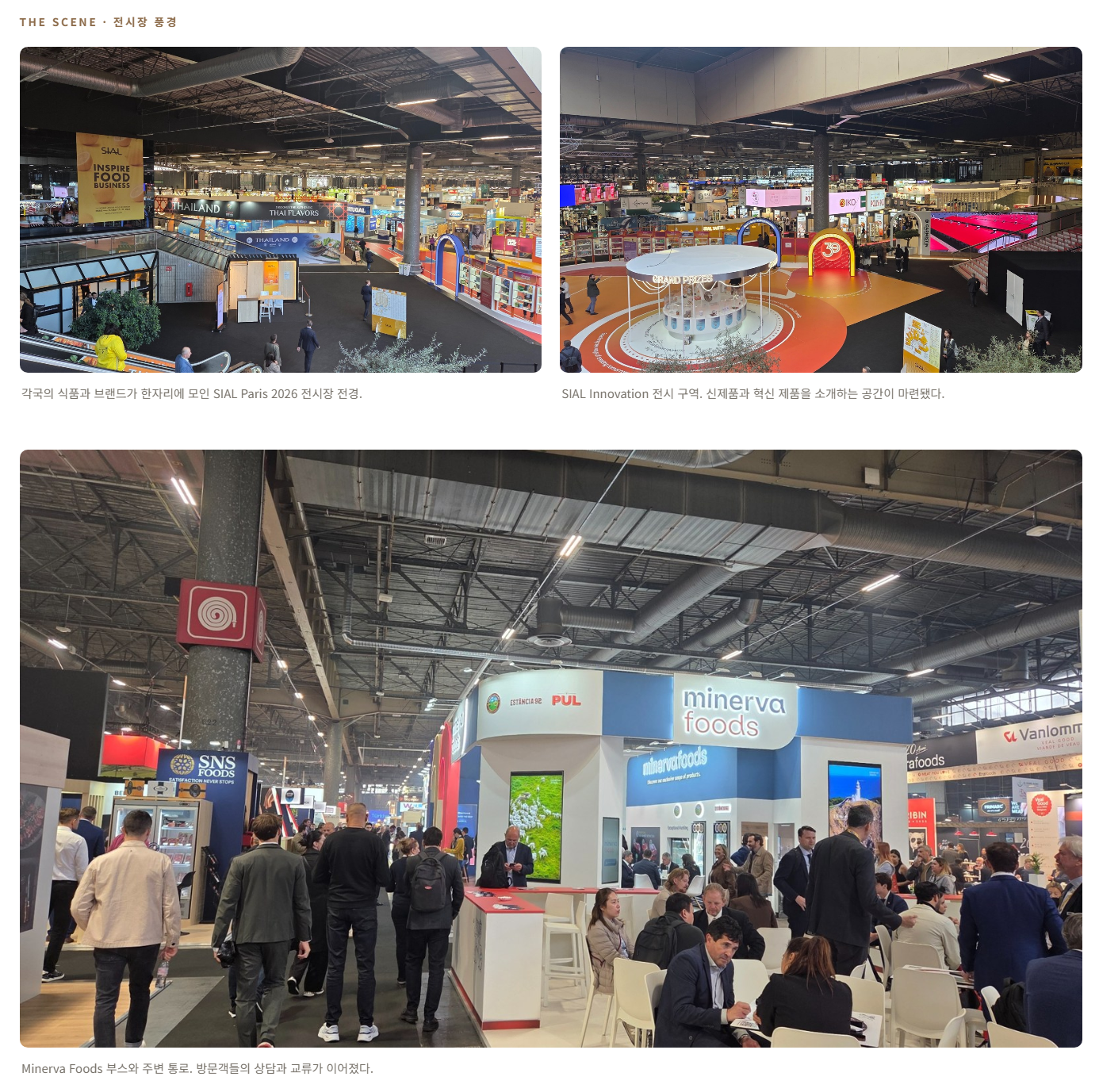
South American beef companies stood out in the meat section of SIAL Paris 2026, where the global food industry gathered. Brazil, Uruguay, and Argentina met with overseas buyers through national pavilions and corporate booths, while Korean food companies promoted their products by showcasing Korean-style fried chicken, processed foods, and tasting events.
At this event, held from October 17 to 21 at the Paris Nord Villepinte Exhibition Centre in France, the meat industry set out to secure business partners by introducing the strengths of their products and origins.
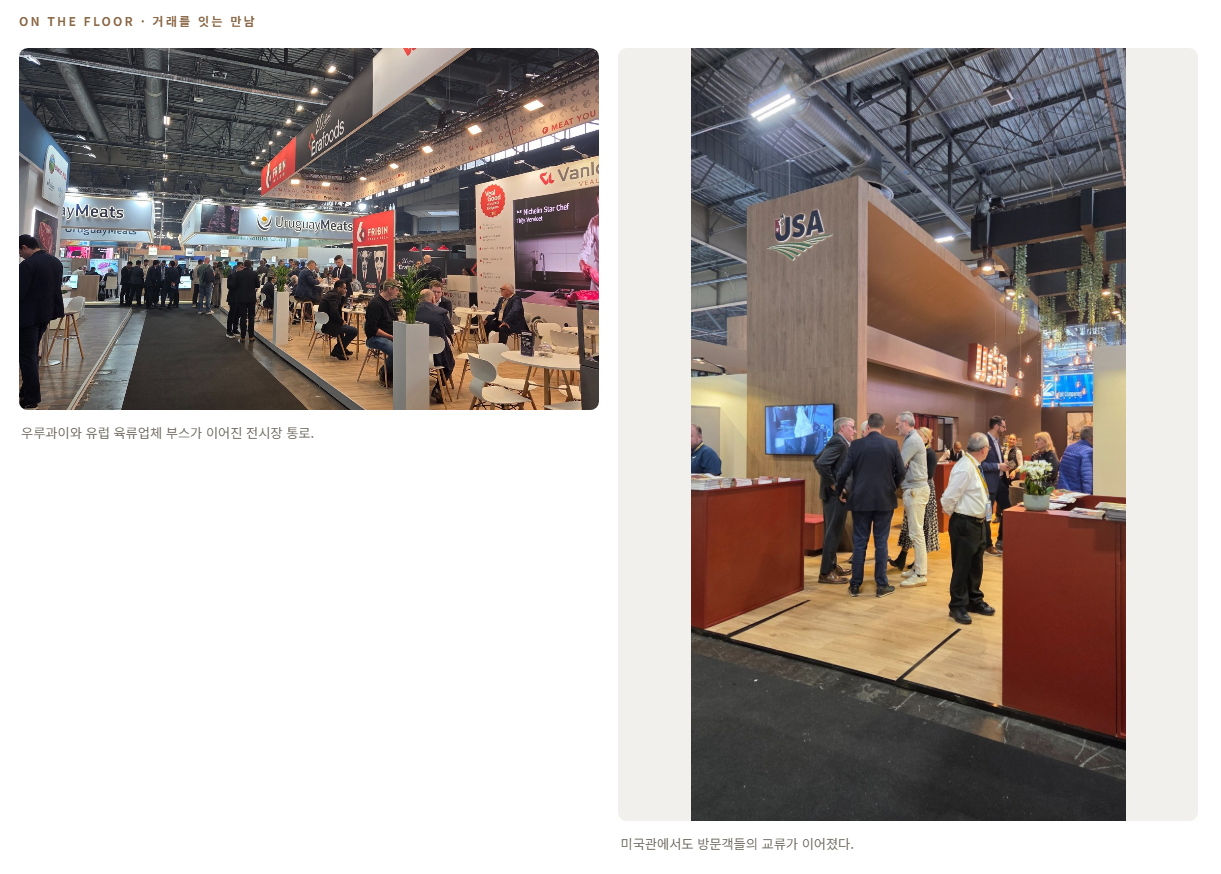
Our correspondent, who toured the site on Monday during the event, reported that the overall atmosphere was calmer yet more lively than before. The subway heading to the exhibition hall was crowded with visitors, and consultations and exchanges between companies continued at the meat hall.
In the area visited by the correspondent, South American beef companies, particularly those from Brazil, Uruguay, and Argentina, stood out. This on-site impression is also confirmed in the participation data for the joint pavilions of each country.
Three South American Countries Target Market with Joint Pavilions and Corporate Booths
The Brazilian Meat Export Association (ABIEC) and the Brazilian export and investment promotion agency ApexBrasil have organized a joint pavilion for ‘Brazilian Beef’. According to advance notice from ABIEC, the pavilion is located in Hall 6 with a size of 600 square meters and is composed of 23 companies, including JBS, MBRF, Frigol, and Prima Foods.
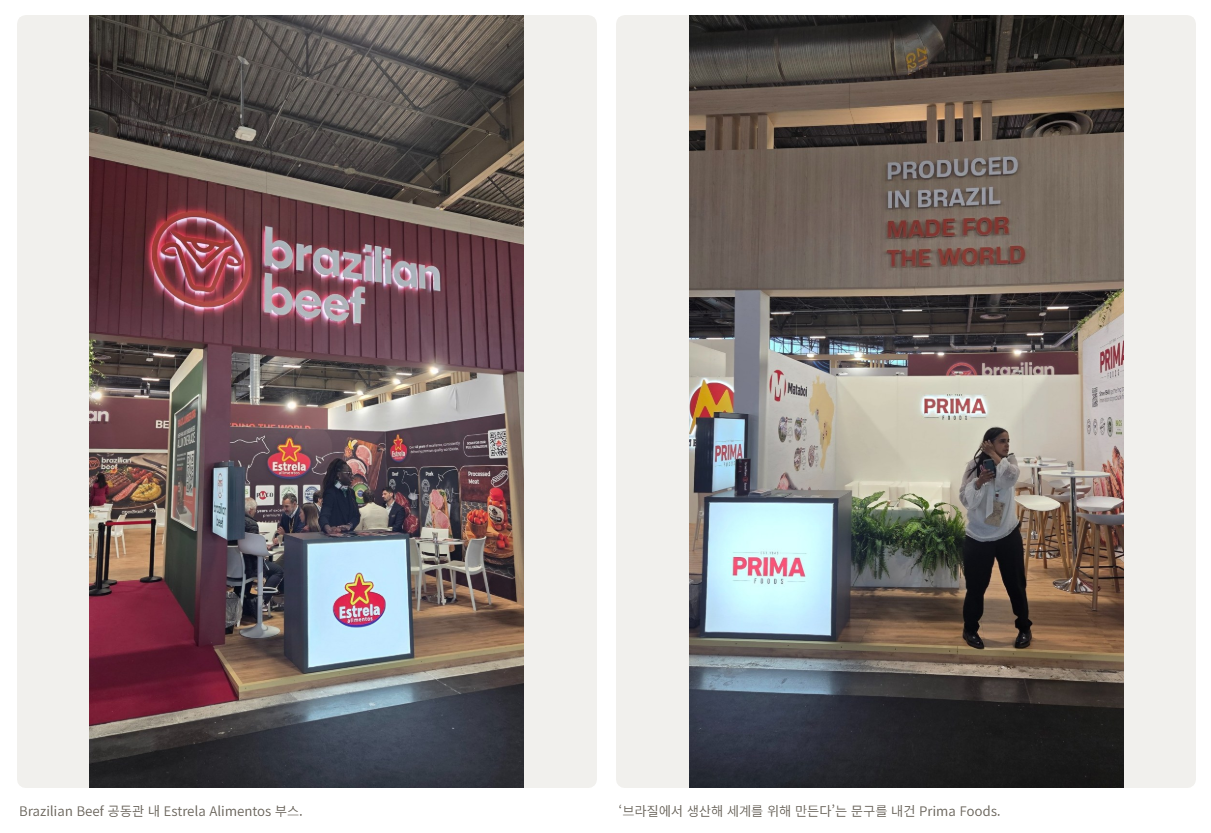
The on-site photos captured Estrela Alimentos introducing beef, pork, and processed meat products under a ‘Brazilian Beef’ sign, as well as the exhibition space of Prima Foods. The slogan ‘PRODUCED IN BRAZIL, MADE FOR THE WORLD’ clearly revealed the direction of supplying products to overseas markets.
Argentina also operated a large-scale joint pavilion. According to the event results published by the Argentine Export Producers Association (APEA), the ‘Argentine Beef’ pavilion covered an area of 1,000 square meters and featured the participation of 30 companies and organizations. Consultations with overseas business partners, including importers and distributors, took place at the pavilion, and a beef tasting area was also operated.
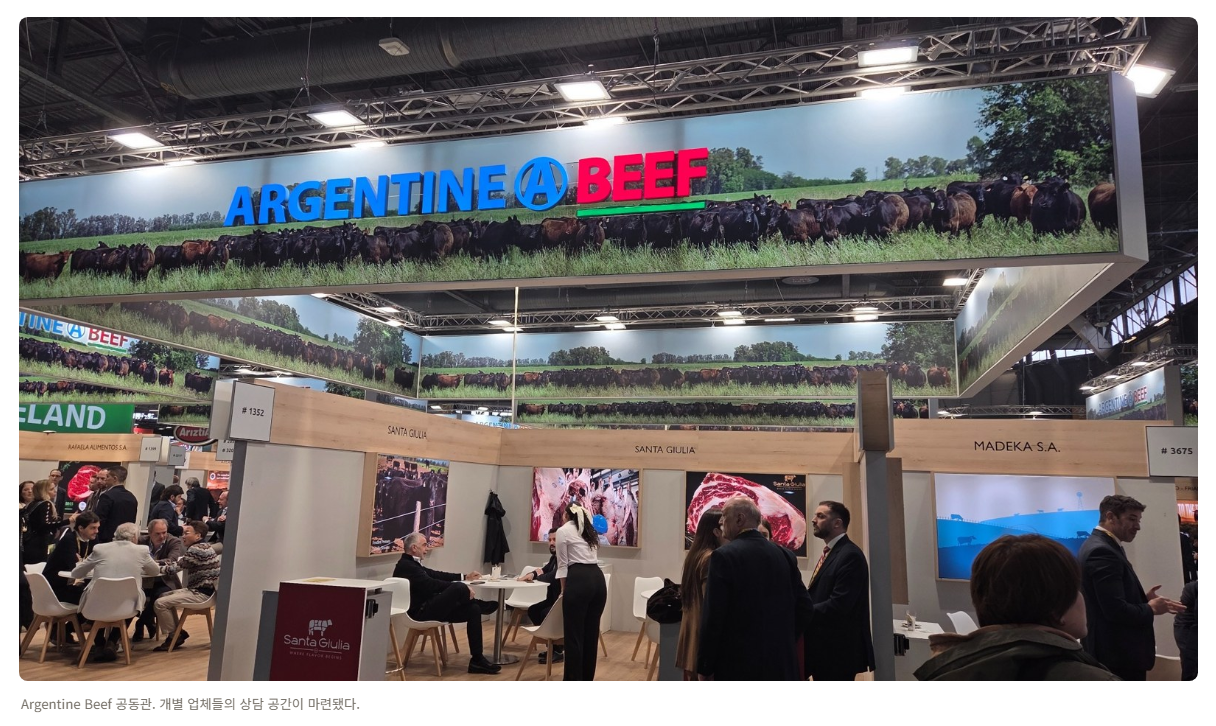
In the photos taken by the correspondent, the ‘ARGENTINE BEEF’ sign against a backdrop of a herd of cattle in a pasture, as well as consultation spaces for companies such as Santa Giulia and Madeka, can be seen. This is a method in which individual companies introduce their products and businesses under a national joint brand.
Uruguay emphasizes ‘beef from nature’
Uruguay put the production environment and the image of the country of origin front and center. The National Institute of Meat Research of Uruguay (INAC) operated a 580-square-meter booth, and stated that approximately 60 people, including co-exhibitors and representatives from related companies, participated.
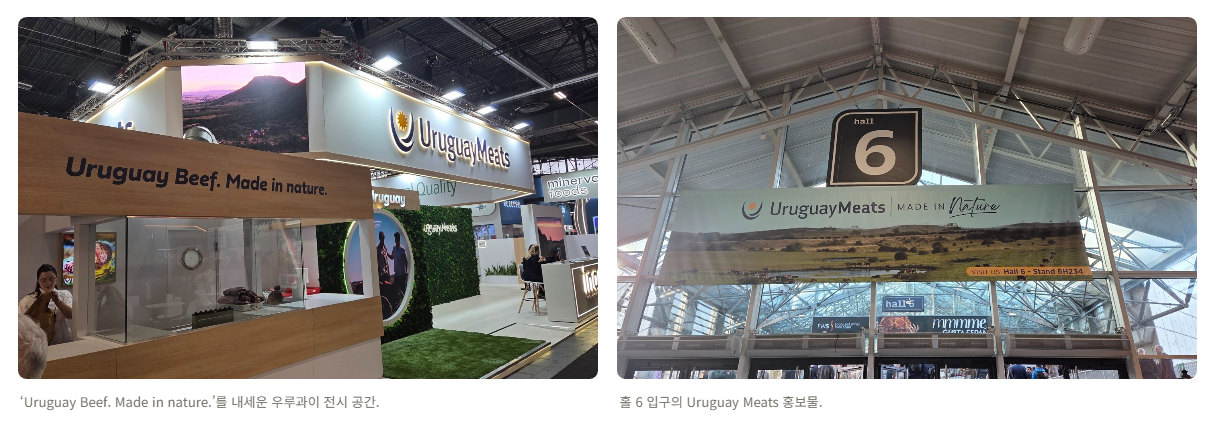
An advertisement for ‘Uruguay Meats | Made in Nature’ was displayed at the entrance of Hall 6. At the booth, visitors were greeted by a space featuring natural landscape videos and green plants, along with the slogan ‘Uruguay Beef. Made in nature.’
INAC presented natural pastures, outdoor rearing, and traceability as key elements for this promotion. They conveyed the message of origin by placing advertisements not only at the exhibition hall but also along the RER B railway line and around the stations used by visitors.
This exhibition demonstrates that in the competition for beef exports, activities explaining where and under what conditions the product was produced are being treated as important, in addition to product specifications and prices.
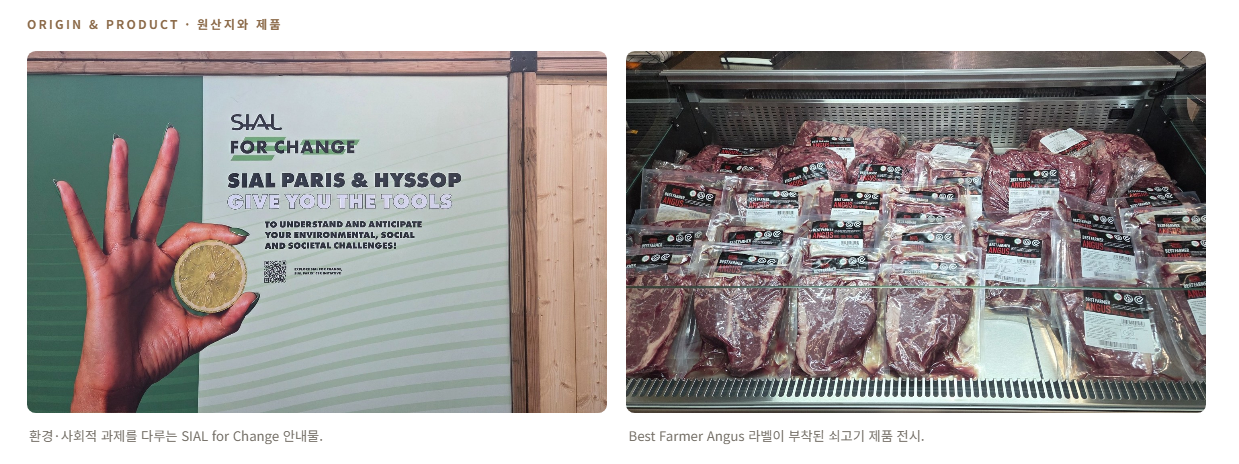
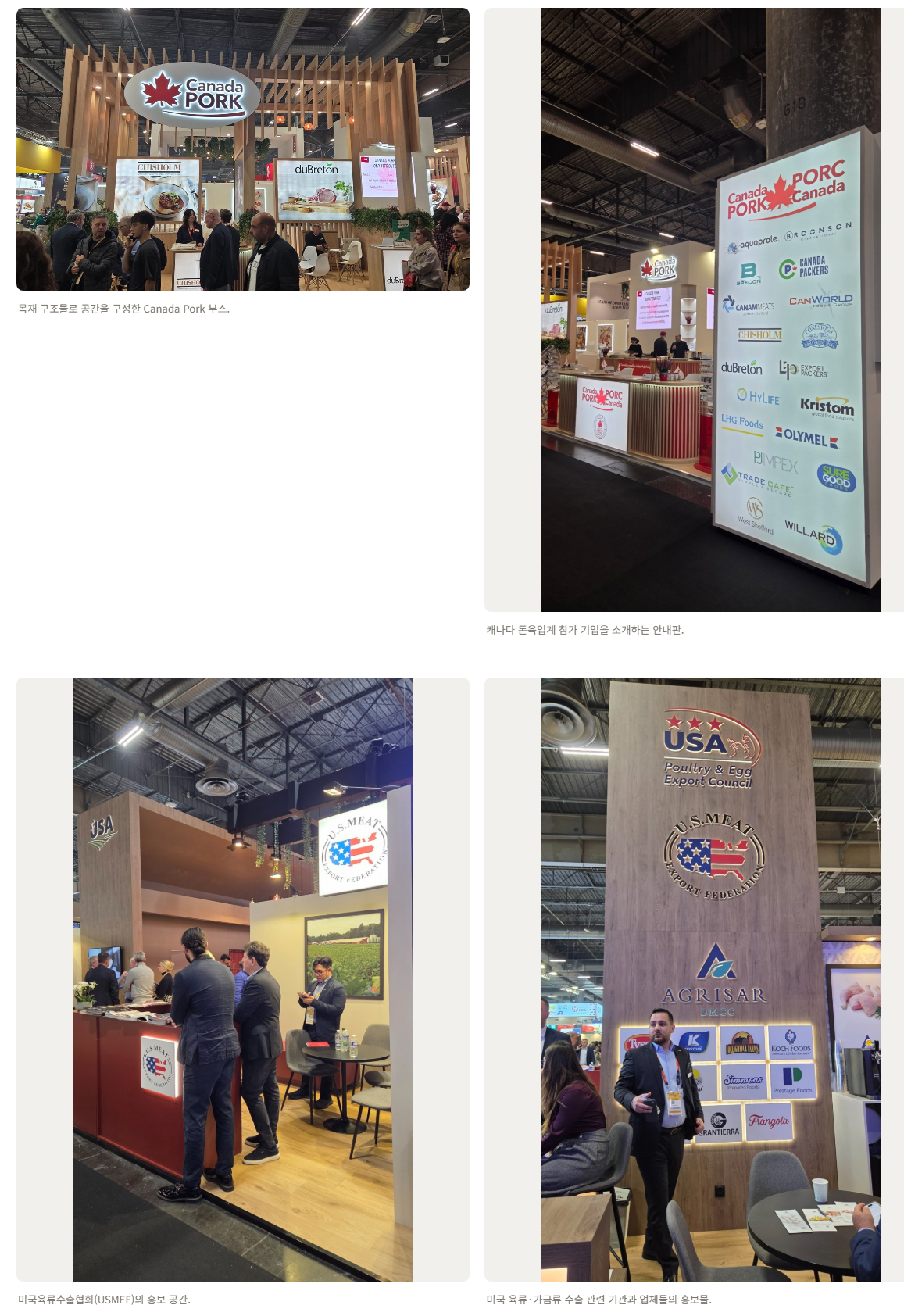
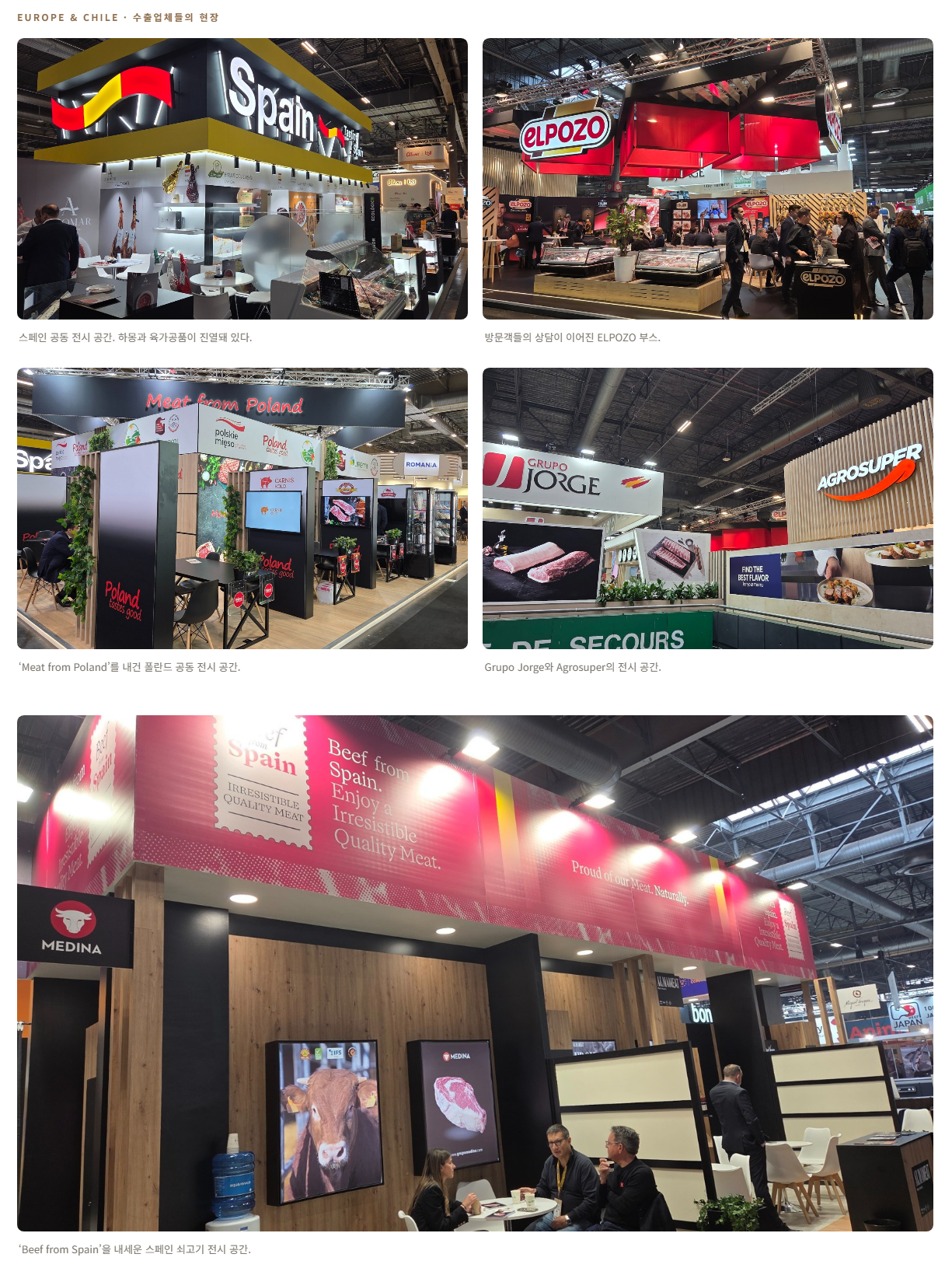
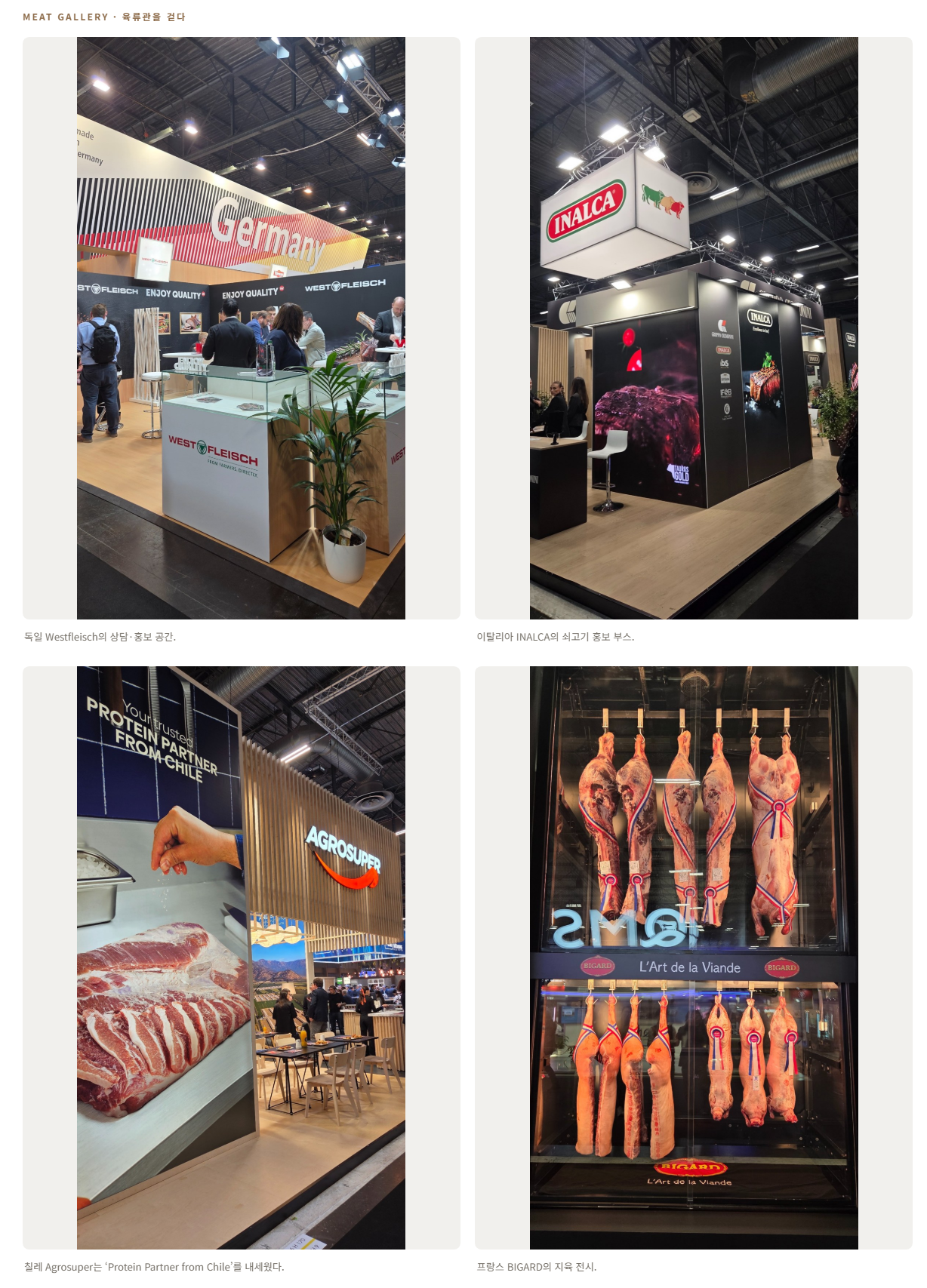
The active participation of South American companies does not necessarily mean a decline in other supplier countries. On-site, promotional spaces for the U.S. Meat Export Association (USMEF) and the U.S. Poultry Export Association (USAPEEC), as well as booths from the Canadian pork industry and European companies from Germany, Spain, and other nations, were observed.
Expectations for the Korean market… cautious regarding specific timing
Some South American company officials contacted by the correspondent on-site expressed interest in the possibility of entering the Korean market. However, rather than having specific entry schedules or confirmed plans, their response indicated that they are preparing in anticipation of future market opening.
During on-site discussions regarding Spanish beef, there were expectations for entry into the Korean market, but no definitive answer regarding the timing was given. The correspondent reported that the officials contacted had not been informed of an official schedule.
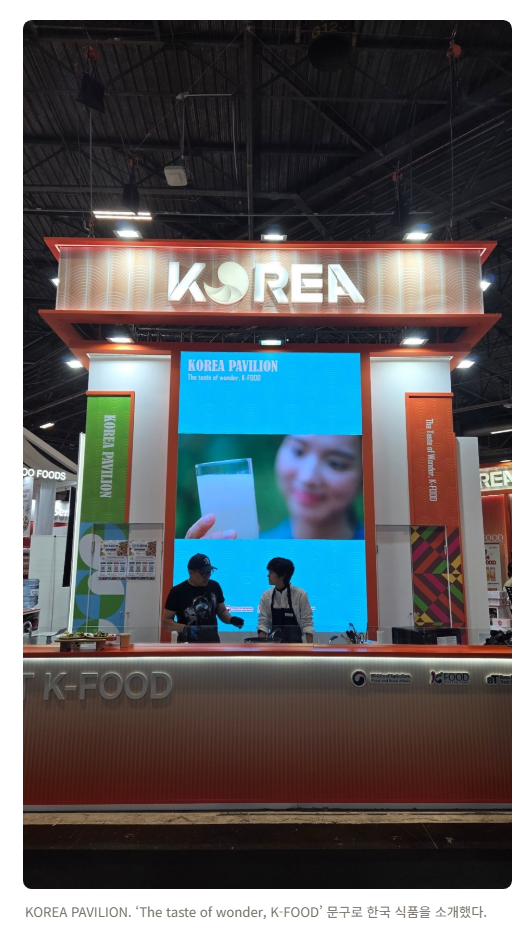
The Korea Pavilion features food tasting and product promotion... Korean-style fried chicken also prominently displayed.
The exhibition spaces of Korean food companies also caught the correspondent's eye. The correspondent reported that product promotions and tastings were held at the Korean pavilion by companies such as Nongshim, Ourhome, and Binggrae, and that there were many visitors eager to try processed foods like ramen and tteokbokki, as well as ice cream. Events allowing visitors to experience the products firsthand, such as Melona tastings and the distribution of merchandise, also added to the atmosphere at the venue.
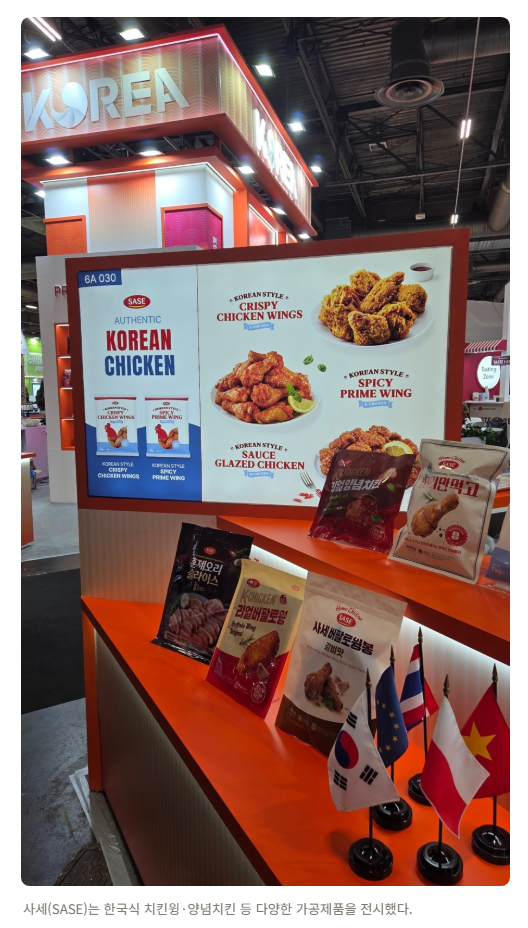
The SASE booth, as seen in the photos, featured Korean-style chicken. Along with the slogan ‘KOREAN STYLE,’ they introduced crispy chicken wings, spicy wings, and seasoned chicken, and displayed various products including wings, drumsticks, and smoked duck. The booth conveyed the Korean flavor through English product descriptions and packaging.
At this event, South American beef companies highlighted national co-brands and the strengths of their production regions, while Korean food companies focused on conveying taste and product experience. From raw meat to processed foods, diverse approaches to introduce products to buyers and connect them to deals filled the meat and food exhibition space at SIAL Paris.
Reporting and Photography:Provided by the field correspondent · Content regarding visitors and atmosphere in the text is based on the correspondent's observations on the day of the visit.
Reference materials
ABIEC · Brazilian Beef Participation Guide— The figures for the Brazil Pavilion are based on advance notice.
Logo:SIAL Paris Official Media Materials· On-site photo: Provided by the correspondent
- #수입육
- #유통
Related Content
Global Field Report
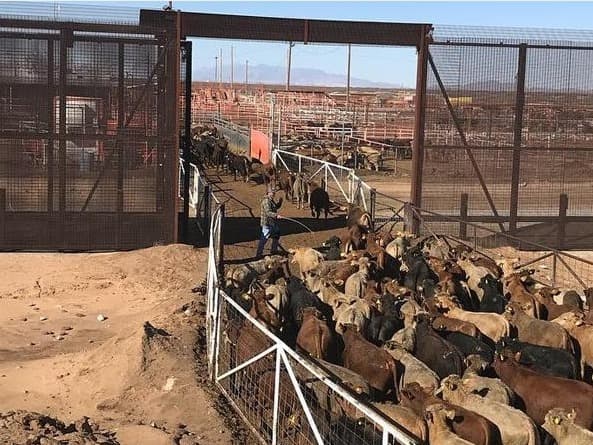
U.S. Expands Import Channels for Live Cattle from Mexico… Phased Reopening of 4 Border Quarantine Facilities
The United States is accelerating the normalization of livestock trade by successively reopening border quarantine facilities for the import of live cattle from Mexico. This approach involves gradually expanding import channels while maintaining the disease control system to prevent the introduction of New World Screwworm (NWS).
2026.10.26
Global Field Report
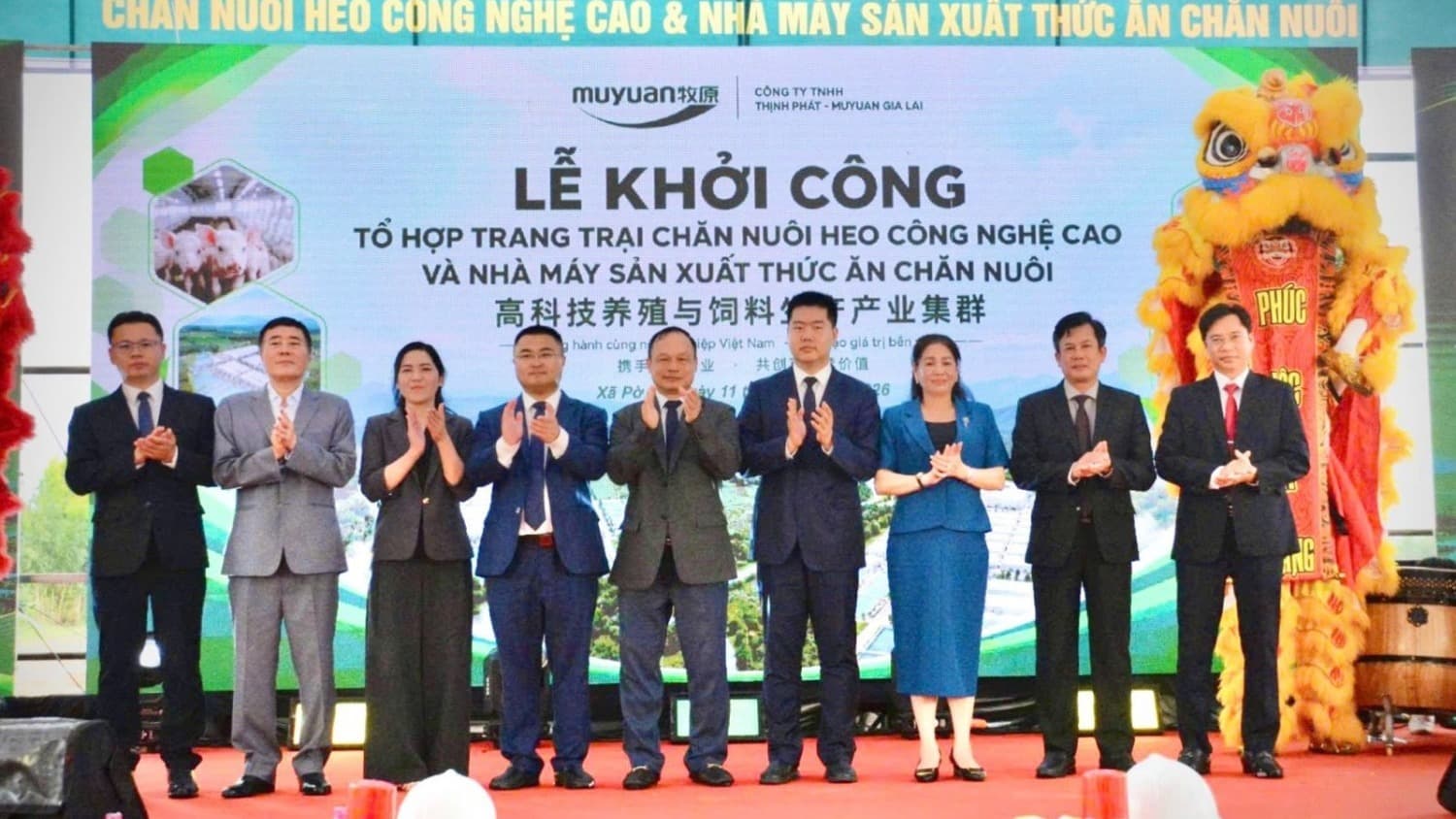
China's Muyuan Invests Approx. 190 Billion Won in Vietnam... Sets Out to Establish 2 Million Head Production System
China's major pig farming company Muyuan is investing approximately $140 million to build a large-scale pig farm and feed factory in Vietnam.
2026.10.19
Global Field Report
Danish Crown Reorganizes Business Centered on European Market… Aims for 50% High Value-Added Meat Sales by 2030
Danish Crown announced a reorganization plan on October 2 and stated that it would increase the proportion of high value-added meat supplied by member farms from the current approximately 25% to 50% by the end of 2030. To achieve this, seven of the existing eight business divisions will be integrated into a single organization.
2026.10.13