
SPECIAL FOCUS
Colombian Pork Opens Export Route to Philippines… 660,000-Ton Producing Nation Knokes to Asian Market
Following the approval of 7 beef and 4 pork processing plants, an agreement was reached on veterinary hygiene certificates.
The door has opened even further for Colombian beef and pork to enter the Philippine market. Colombia's Department of Agriculture and Rural Development announced on September 30 that the Philippine government approved Veterinary Health Certificates applicable to Colombian beef and pork.
Accordingly, workplaces and products that have received export approval to the Philippines have advanced to the stage where they can apply for import permits from local authorities. However, the approval of the Veterinary Sanitation Certificate does not mean the immediate commencement of commercial exports. Individual import permits and additional product and quarantine requirements from the Philippines must be met.
11 workplaces approved following on-site inspections
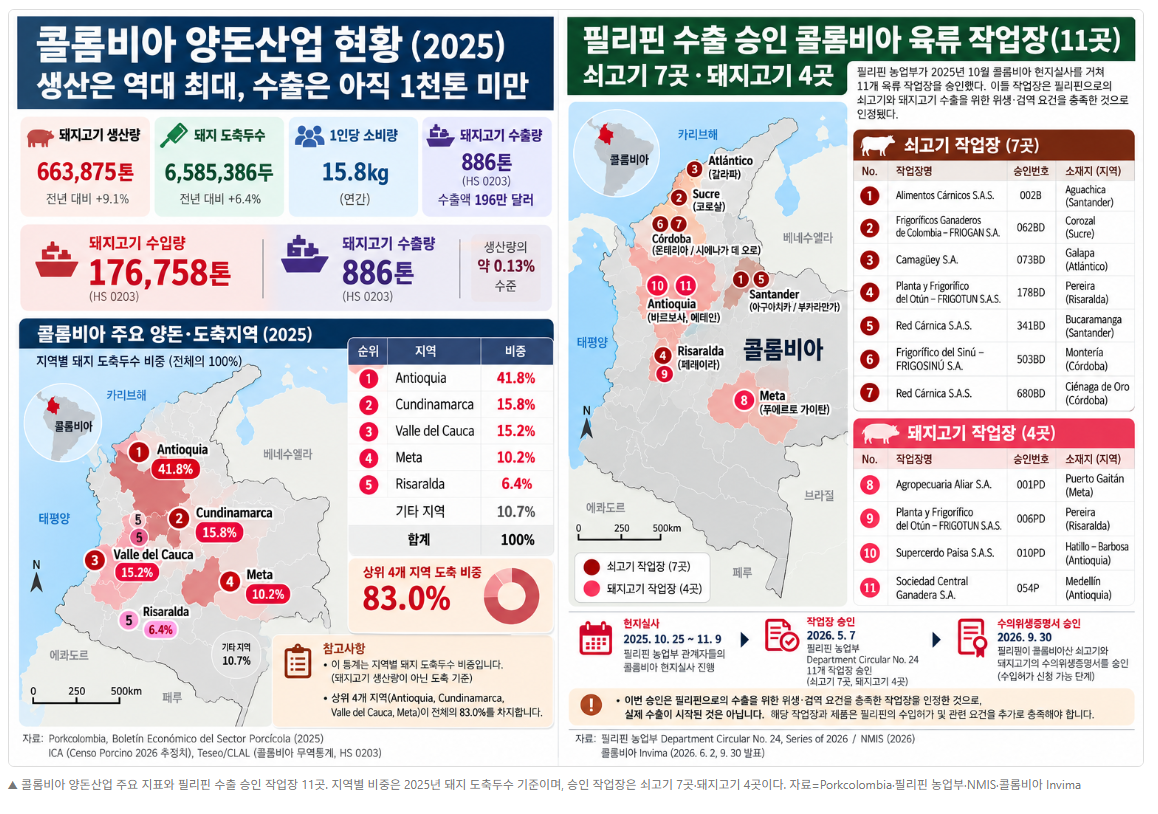
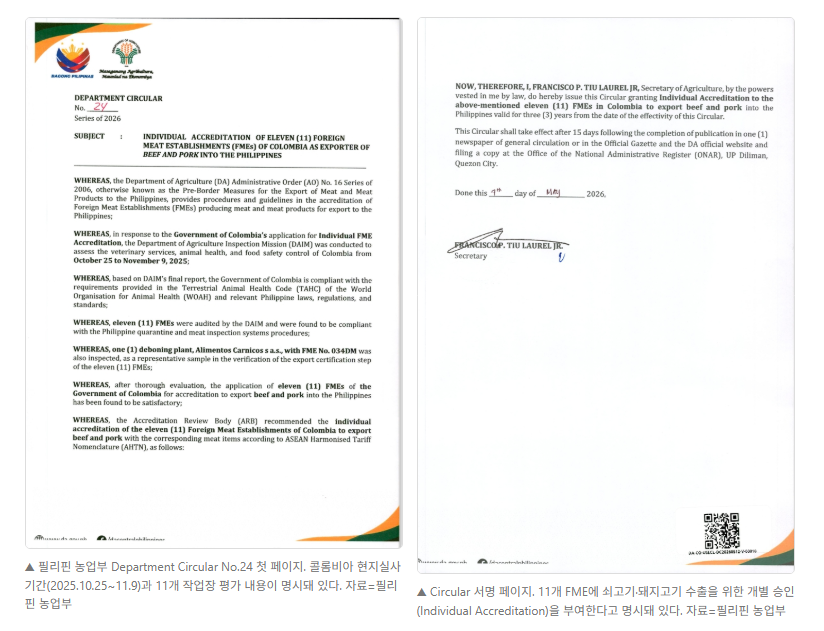
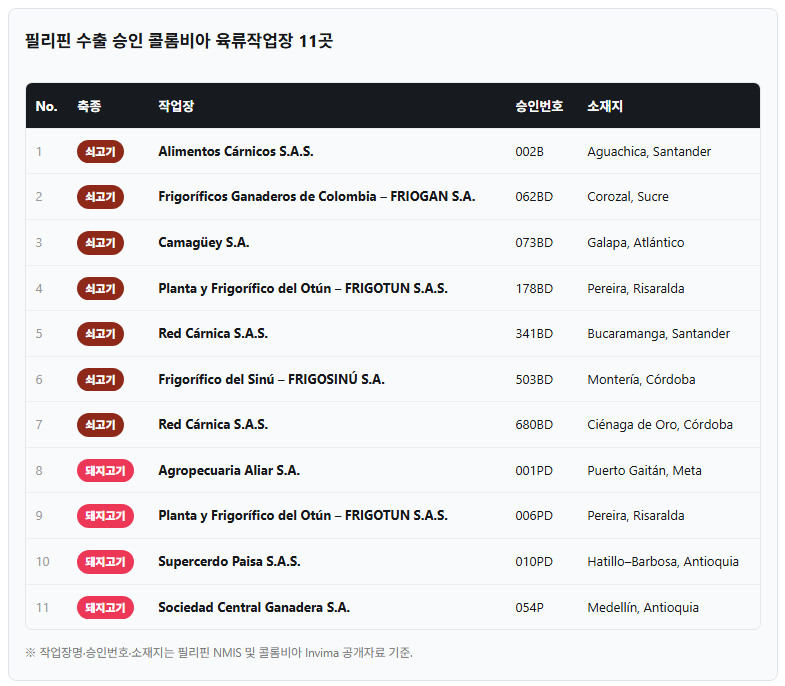
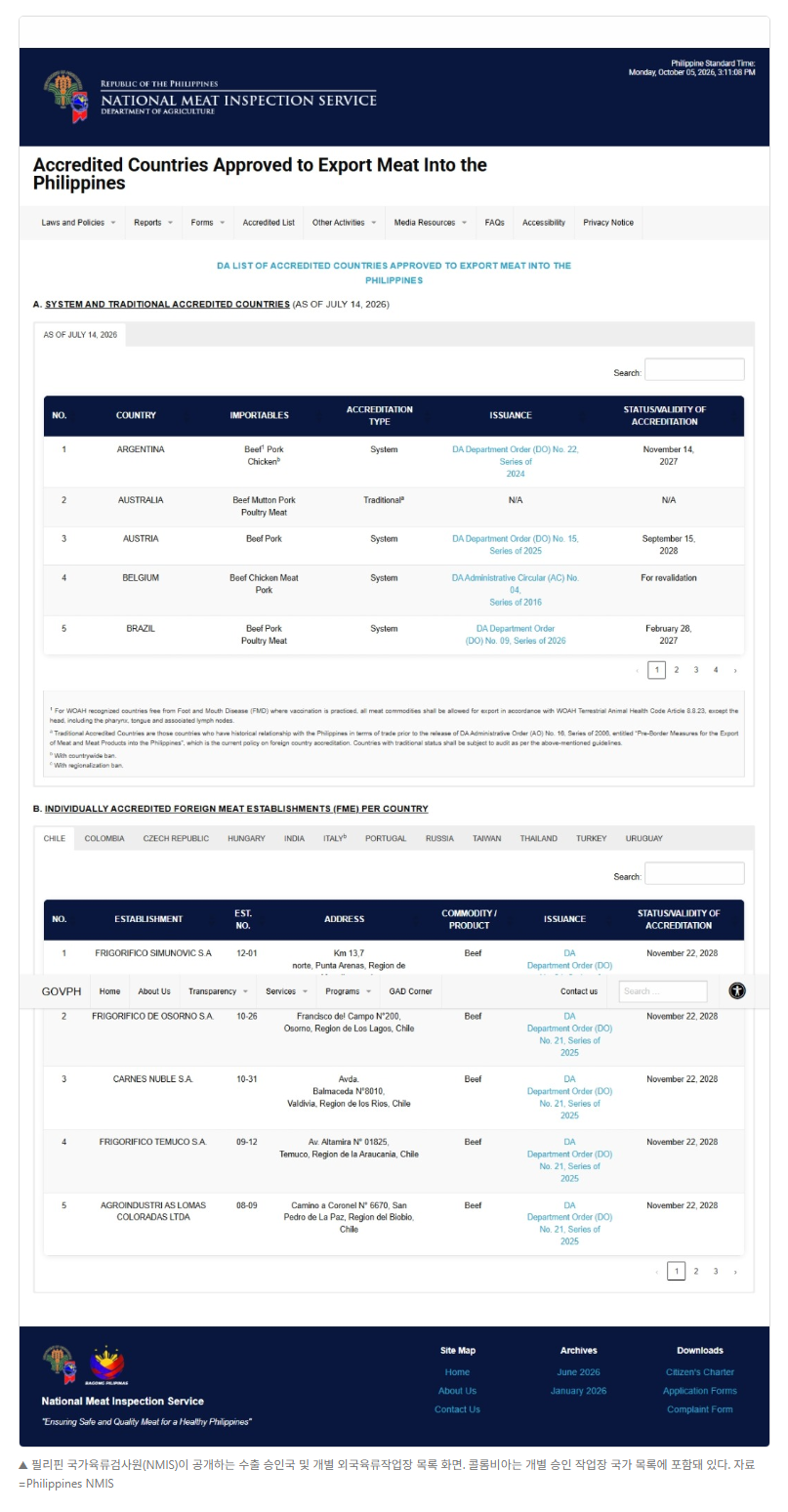
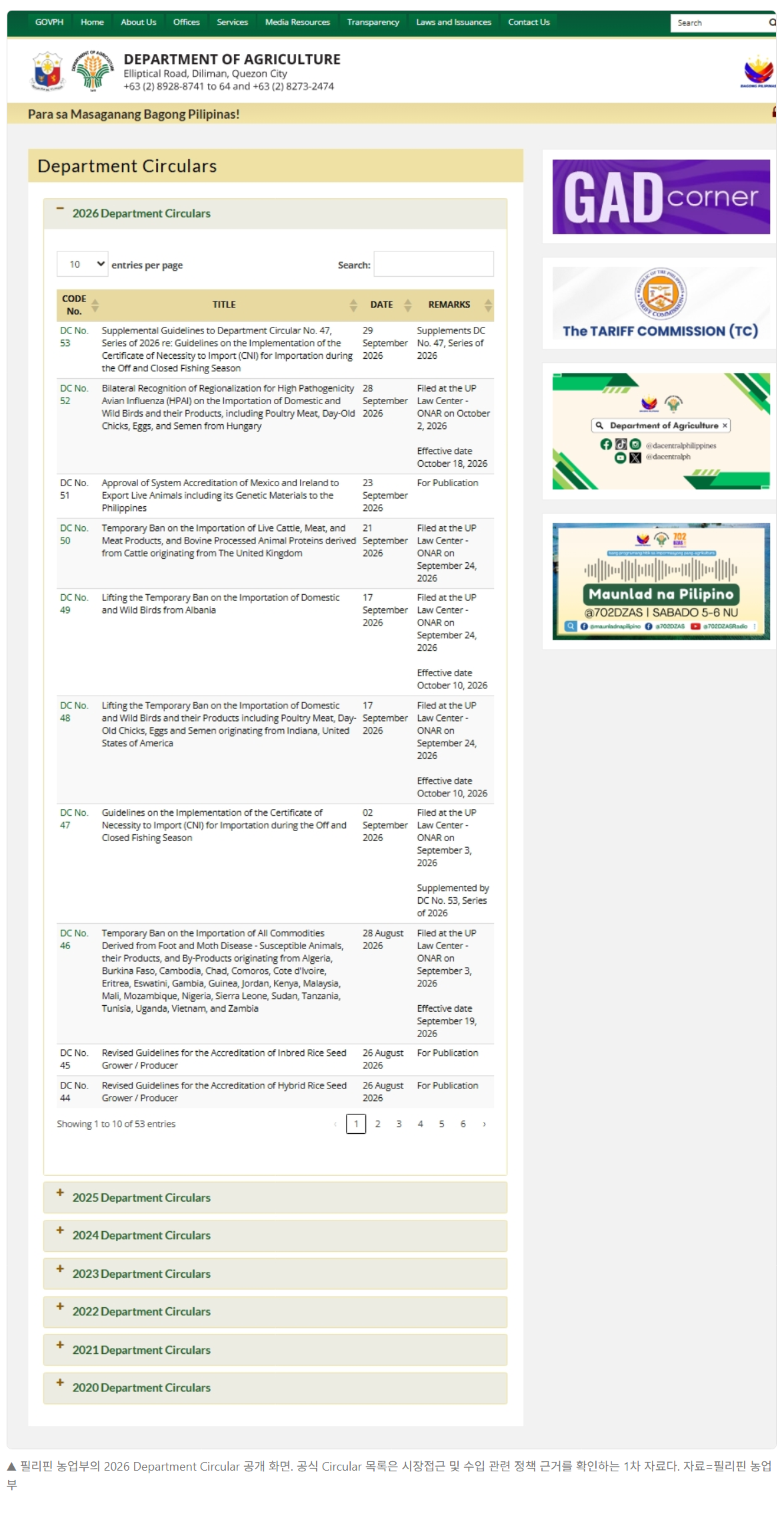
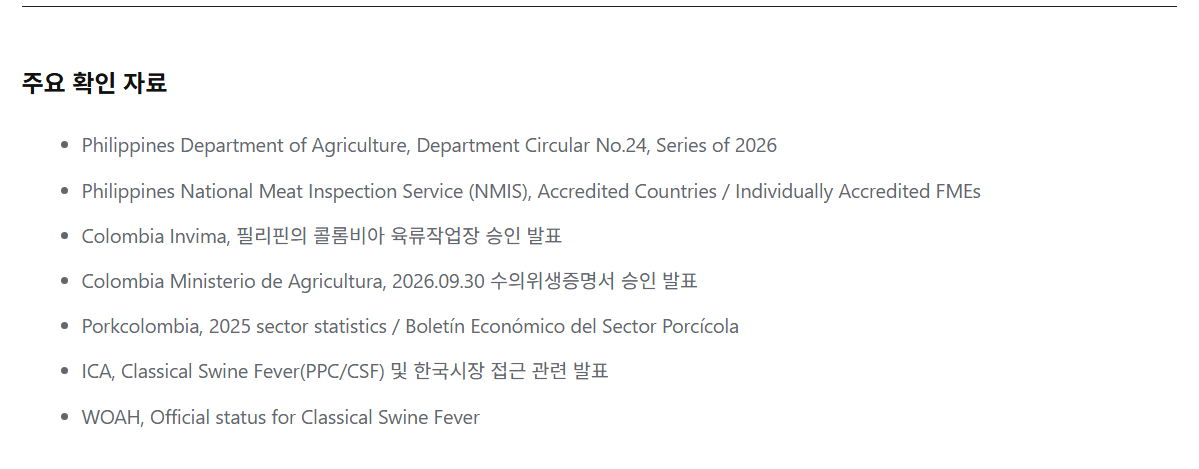
The Philippine Department of Agriculture on May 7, 2026Department Circular No.24, Series of 2026Through this, 11 foreign meat processing plants (FMEs) in Colombia were individually approved. The approved plants include 7 beef plants and 4 pork plants.
The Philippine Department of Agriculture inspection team in the official CircularFrom October 25 to November 9, 2025It is stated that on-site inspections of veterinary services, animal health, and food safety management systems were conducted in Colombia. It also includes the content that 11 workplaces subject to inspection were assessed as meeting Philippine quarantine and meat inspection requirements.
The Philippines, which imports 850,000 tons of pork annually
The reason Colombia is focusing on the Philippine market is its size. According to a report by Colombia's Invima citing data from the U.S. Department of Agriculture's Foreign Agricultural Service (USDA FAS), the Philippines is expected to approximately... by 2025851,800 tonsPork was imported. Beef imports also reached approximately 207,400 tons.
Compared to Colombia's current pork export volume, the scale of the market is on a completely different level. The agreement on veterinary health certificates, following the approval of processing facilities, is significant in that it moves beyond simple market access consultations to a stage where actual import permit applications can be submitted.
Pork production surpasses 660,000 tons… all-time high

According to Porkcolombia, Colombia's pork production in 2025 is663,875 tonsIt increased by 9.1% compared to the previous year, reaching an all-time high. During the same period, the number of slaughtered pigs...6,585,386 headsIt increased by 6.4%.
The proportion of pig slaughter by regionAntioquia 41.8%, Cundinamarca 15.8%, Valle del Cauca 15.2%, Meta 10.2%This is the order. These top four regions account for the total number of slaughtered animals.83.0%It takes up the share, followed by Risaralda at 6.4%.

Production is 660,000 tons, but HS 0203 pork exports are 886 tons.
Colombia is not yet a typical export-oriented pig farming country.
Domestic demand has grown, but exports are still less than 1,000 tons.
Colombia's per capita pork consumption in 2025 is15.8kg... continued its upward trend. On the other hand, pork (HS 0203) export volume886 tonsExports were recorded at approximately $1.966 million. Although this represents a significant increase from the previous year, the absolute scale remains small, and when simply compared to the production volume of the same year, it is approximately0.13%It is at that level.
Colombia's pig farming industry has historically grown based on expanding domestic consumption, rather than following a structure centered on overseas sales like those in Brazil, the U.S., and Canada. Therefore, rather than explaining the small export volume to specific diseases or a single factor, it is necessary to consider the domestic-oriented industrial structure, approval of sanitary market access by importing countries, price and logistics competitiveness, and the level of accumulated export industry experience together.
Expansion of CSF-free zones serves as a foundation for accessing export markets.
A foundation in livestock hygiene is a key condition in the process of pioneering overseas markets. Classical Swine Fever (CSF, PPC in Spanish) is one of the major hygiene requirements in the international pork trade.
Colombia from the World Animal Health Organization (WOAH)Country-wide CSF-freeIt was not recognized as such, but rather officially for some regionsCSF clean zoneIts status is recognized. The Colombian National Institute of Agriculture and Livestock (ICA) explains that about 95% of specialized and technology-intensive pig production takes place in CSF-free regions.
Therefore, rather than attributing the current low export volume to a single cause, it is appropriate to interpret CSF as a process in which Colombia has established a hygiene infrastructure for accessing overseas markets by expanding the cleanliness of its major production areas.
Where is next after the Philippines? Korea has also been ‘knocking’ for a long time.
Colombia's push into the Asian market is not limited to the Philippines alone. It has already secured access to the pork hygiene market in some Asian countries and has been pushing for market opening in major markets such as China.
Korea is also a country with which Colombia has long pursued market access. According to data from the Colombian ICA,Requests for pork market access for countries including Korea are underway by 2016 at the latest.In 2018, a delegation from the Colombian Ministry of Agriculture and the ICA visited Seoul and held direct discussions on pork market access issues with officials from the Korean Ministry of Agriculture, Food and Rural Affairs and the Animal and Plant Quarantine Agency.
It is noteworthy that Colombia, which produces over 660,000 tons of pork annually yet exports less than 1,000 tons under HS 0203, has laid the groundwork to enter the Philippine market, which imports over 850,000 tons of pork annually. It remains to be seen when the first commercial exports will actually begin and to what extent they will expand in scale.
However, if access expands to major Asian markets, including China, following the Philippines, there is a possibility that changes will occur in the structure of Colombia's pork industry. The procedures for accessing the Korean market, which have been under discussion for a long time, are also a point that the domestic meat industry should closely monitor.
- #수입육
- #축산물
- #유통
Related Content
SPECIAL FOCUS
Chicken Supply Rises, But Cuts Are Short… Mixed Supply and Demand Battle Amidst November Price Drop
The broiler market in November is expected to face increasing downward price pressure due to the rise in slaughter volume. However, it is difficult to conclude that the overall supply and demand in the chicken market has become sufficient based solely on the increase in supply.
2026.11.6
SPECIAL FOCUS
U.S. Government to Purchase $41 Million in Pork… Supporting Market Stabilization for Agricultural, Livestock, and Fisheries Products
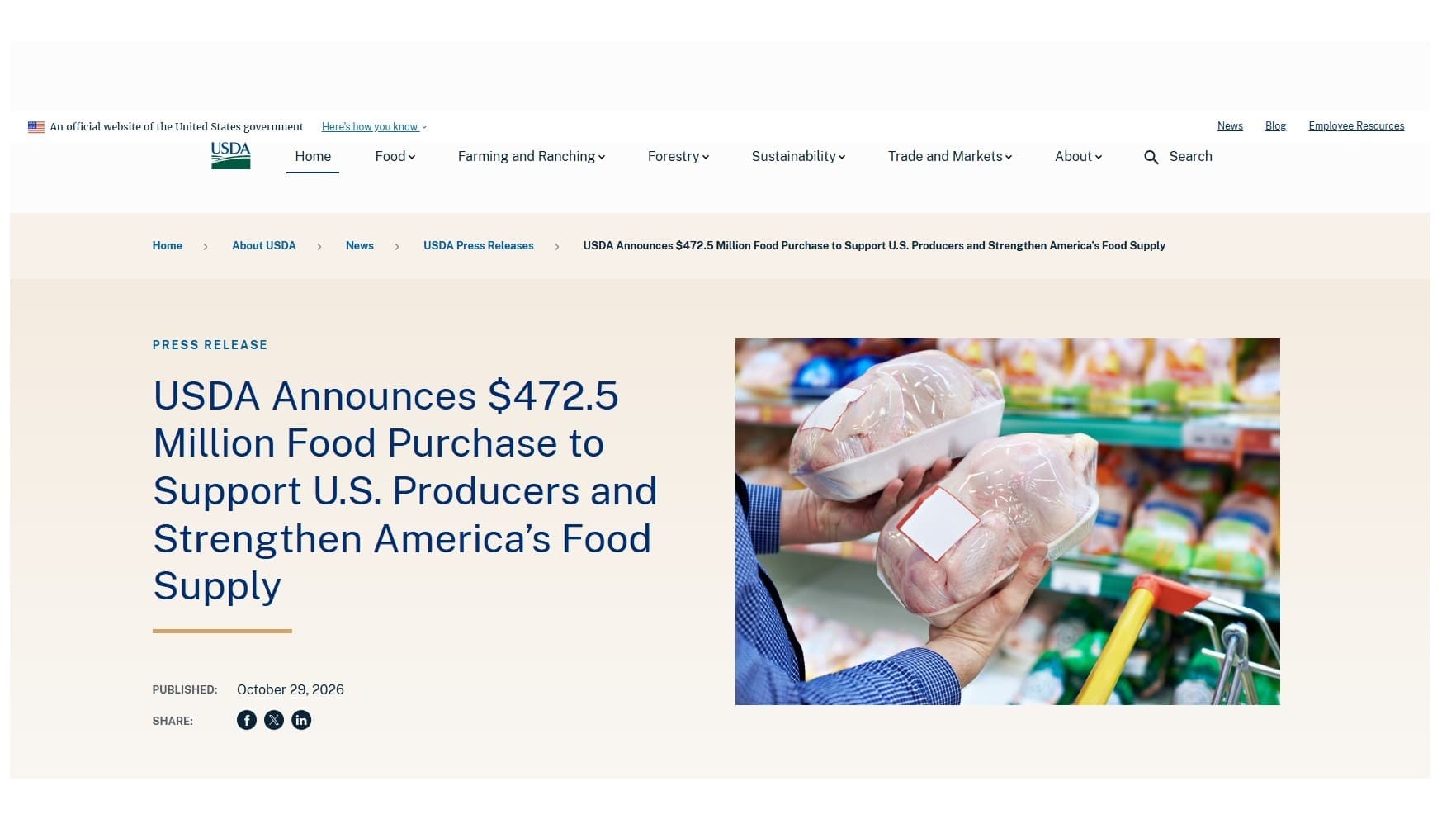
The U.S. Department of Agriculture (USDA) announced a plan to purchase agricultural and fishery products worth a total of $472.5 million, including $41 million in pork and $20 million in chicken.
2026.11.1

SPECIAL FOCUS
Pork trotters restaurants have changed, but the raw material market remains the same… What is the way out for domestic pork trotters?
The fact that domestic pig's trotters are not selling does not mean that consumption of pig's trotters has disappeared. The issue lies in how well the market supplying the raw materials has kept pace with the changes in how consumers select and order pig's trotters.
2026.10.29